

| Main Index Page | General Ratings Page | Rock Chronology Page | Song Search Page | New Additions | Message Board |
"Got to find me a way to take me back to yesterday"
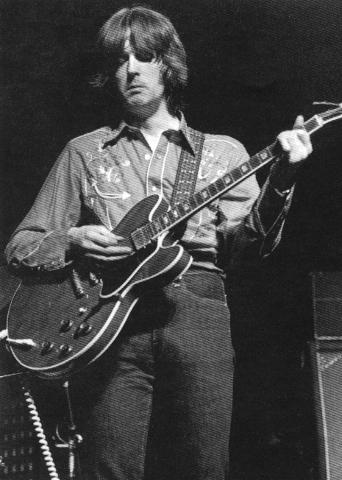
Class C
| Main Category: | Guitar Heroes |
| Also applicable: | Rhythm & Blues, Roots Rock |
| Starting Period: | The Psychedelic Years |
| Also active in: | The Artsy/Rootsy Years, The
Interim Years, The Punk/New Wave Years, The Divided Eighties, From Grunge To The Present Day |
ALBUM REVIEWS:
HIT PACKAGES
VIDEOS:
APPENDIX: Review of an Eric Clapton live show in Moscow, April 10, 2001
Disclaimer: this page is not written by from the point of view of an Eric Clapton fanatic and is not generally intended for narrow-perspective Eric Clapton fanatics. If you are deeply offended by criticism, non-worshipping approach to your favourite artist, or opinions that do not match your own, do not read any further. If you are not, please consult the guidelines for sending your comments before doing so. For information on reviewing principles, please see the introduction. For specific non-comment-related questions, consult the message board.
For reading convenience, please open the reader comments section in a parallel browser window.
Eric Clapton is the greatest guitar player on earth. Period. You can deny everything about him - say that his songwriting skills are deep down in the toilet, that over the past twenty years he has brilliantly succeeded in eliminating all of his Cream legacy, that a lot of his output, especially in the Eighties, is stupid pop crap, that he's no showman, that he only pretends to be 'rocking' when in fact for a long time he's been doing little else but soft sludge, and lots of nasty things.
I AGREE. Well, not completely. All of these arguments are quite valid. Eric is indeed a very limited songwriter - but he just follows the classical 'rule' that says 'either you play guitar or you write songs, you can't be God in both categories'. Like every limited songwriter, he's got a handful of self-penned classics behind his belt, but he was never prolific. In his early Cream days, he's written about two or three songs, and even later, when his songwriting finally got on a roll, he was as a rule covering others' songs better than producing his own ones. But, well, this is not the best argument on Earth. Likewise, both Jimi Hendrix and Jimmy Page were pretty limited songwriters, certainly not better than Eric could ever hope to be, and somehow legions of both their demented and their more cool-headed fans never seem to bring it up as an argument to disqualify them.
As for the other statements, I agree only partially. It is true that the greatest legacy that Eric has left to us (and I really doubt he'll be leaving much more than he already did) lies in what he did in the Sixties, mainly with Cream, and in the early Seventies, with the Dominos. And there is a large distance between albums like Layla and, I dunno, Backless, not to mention the Phil Collins-produced garbage of the mid-Eighties. But dismissing all of Eric's output after 1970 based on the assumption that 'it's all soft rock crap' is plain ridiculous. Whoever gave the right to proclaim 'hard' rock's undisputable supremacy over 'soft' rock? The matter is not whether you play low distorted notes or high clear ones; the matter is whether you play your instrument good or play it bad.
The main problem I see with Eric's post-1973 career is that he's been a bit too intelligent for his own sake. Starting with 461 Ocean Boulevard, he has imposed a self-created curse upon himself. Yes, I know he probably thought it a blessing, but alas, time has shown that it was an incorrect decision. Namely, he has done everything possible to wash away the tag of 'guitar hero'. Most of his studio albums feature a very limited amount of guitar solos, and even when he played live, he always behaved as if he was just an ordinary player in an ordinary band, not noticing the fact that people came to his concert to see him play the guitar. Instead, he turned to 'experimenting' with various roots rock genres, moving into soft blues, country, and gospel territory, and trying to build up a 'new' reputation from scratch. Did he succeed? On a certain level, perhaps; many of his regular studio albums sold well, and commercially Eric is still a good proposition. He's the favourite 'rocker' of every decent housewife and every respected politician - why, he's clean, he doesn't swear, he plays 'blues', and he has 'feeling'. Recently, Eric has joined the 'Great Washed Up Club': you can regularly see him at some charity concert with other ancient losers, such as Paul McCartney or Elton John. His latest albums are heavily influenced by contemporary production values (so he's 'hip'), and...
...wait! Why are you running away? Come back and stop your vomiting! I know, I know. Eric has got many faults, and none of the things described above qualifies him as someone that real serious rock music lovers should be listening to. But you have to get over the image, you know. Get over the image and concentrate on the music: Eric has really come up with some brilliant compositions of his own, as well as some blistering covers of other persons' material, over the years, and his performances have usually been tasteful, gracious and pleasant, when not spoiled by Phil Collins. And also, over the years this infamous self-imposed curse has slowly been dissipating. The first half of the Nineties has been especially good for him: Unplugged and From The Cradle stand out as brilliant achievements that really made me thought he was back - until I heard his latest crap, of course. But here I am, and let ME guide you through the crap and lead you to the records that are indeed worth picking, if you're credulous enough to trust my opinion.
And it's also not true that Eric doesn't play the guitar at all after 1973. First of all, he doesn't play anything else; he's bound to be playing guitar. Second, it's just that on all of his solo studio records, he never goes overboard with his instrument - most of the solos are short, snappy and up-to-the-point. It's practically impossible to find a Clapton record without guitar solos, just as it is impossible to find a Jethro Tull record without the flute. And Clapton's guitar playing always does him a good service: it arrives at the right moment to save even the most disgusting record (yeah, like the Phil Collins-produced ones) from the utter depths of humiliation.
And his guitar playing is really good. It's also quite controversial: for instance, I have heard many people complain about his 'too technical' approach to the guitar, saying that his playing is self-indulgent, emotionless and serves exclusively to shock the so-called 'blues elite' with its flawlessness. Now if it's Cream or Blind Faith we're talking of, I can understand such complaints, although I don't necessarily agree. But if it's his solo stuff, starting from Derek and the Dominos, that we're talking of, then I, for one, hold exactly the opposite opinion.
Clapton isn't that much of a 'technician', really. He did explore the potential of the guitar in the mid-Sixties, but the end of Cream put an end to that. Since then, Eric's guitar playing was always directed exclusively into the side of 'emotion'. And this is, indeed, what makes it so special to me. See, Eric managed to get the reputation of 'best guitar player' (or, at least, one of the best) without any special tricks. He didn't use the guitar as an integral part of his body, like Jimi Hendrix; he never used it as a monstruous sonic tool, like Pete Townshend; he never grated it with a violin bow, like Jimmy Page; and he never played ten thousand notes per second, like Ritchie Blackmore. He played it, that's all. His solos might be long, but they're never gimmicky. Moreover, he is one of the extremely rare guitarists who can be a great master of complicated technics and blazing speed, but is often willing to hold off these things because he just as well understands the true meaning of pauses in between the notes. If you don't know what I'm talking about, check out Clapton's guitar solos on 'Double Trouble' and 'Blues Power' from the Just One Night album; not a single guitarist I know could have combined both of these approaches with such complete mastery. And of course, Eric's technique never values much if the actual sounds he's playing aren't filled with emotion: for that, listen to Live At The Fillmore, the record which, in my opinion, is the best place to start with Eric as a guitar player, and tell me these solos aren't directed right at the bottom of your heart. They are, and that's a fact. Few guitarists have brought me to the edge of tears as frequently and consistently as Eric, and yup, I am a wuss who likes to cry over a really heartmoving song (and if you don't, get out of here, you stone-hearted metallic idiot). And for that, I'm ready to forgive him every single bit of crap he's pumped on me through the years - no matter how much (and aye, much it is).
And let me go out with a bang, too: I've had enough of pretentious elitist idiots who dismiss Clapton with a wave of their hand, saying stuff like "soulless routine white boy trying to play the blues". Clapton certainly plays his blues in a different way than the old black masters; this is only natural, considering that he's a white Brit boy who basically lived outside the whole blues legacy. But different does not mean worse - and much too often, it means better, as Eric never relied on tired blues cliches, always looking for new sounds and new inspirations. His basic music style might have become deeply conservative since the mid-Seventies, but that did not really involve his constant search for a new style of soloing: the 1975 live Clapton, for instance, is vastly different both from the 1980 live Clapton and the 1992 live Clapton. Of course, if somebody isn't deep enough to appreciate the soulfulness and profound inspiration of Clapton's playing, both in its recorded and improvised form, I can only pity the person in question; however, I suspect it has far more to do with the natural feeling of despisal that "elitists" experience towards any artist that acquired commercial success. I mean, sometimes I feel that if Eric's records sold ten times less than they did and if he weren't elevated to god status by the mass-media, critics and the 'simpler' public (which is also unjust, but at least it's better to pray to the man than to trample him into the dirt), he would have been a true underground hero and all the "elitists" would now be worshipping him like they worship... ehhh... Negativland instead. But noooo, he went ahead and recorded an unplugged version of 'Layla', the bastard! The scum! The dirty white boy ripping off the old masters! To hell with him! We fuckin' hate ze guy!
That's what I call "unprovoked self-brain-washing". Was I too rude? Hardly.
On this page, I am reviewing most of Eric's solo albums (starting from 1973's Rainbow Concert), as well as his Derek And The Dominos output and the single album he cut with John Mayall in 1966. Cream and Blind Faith, the two famous supergroups he played in, were much more than just 'Eric and company', so both of them receive separate pages on this site. And, much as I'd like to review Eric's Yardbirds catalog, I'll have to wait until I get something substantial, other than just a hit package of the band I have, which only includes three or four songs they recorded with Clapton. Yup, Eric's career was a long and fruitful one.
General Evaluation:
Listenability: 3/5. While
I'm far from dismissing Eric's solo career as 'TOO BORING (drumroll)',
as so many people do, I do admit he had major lapses of taste in the Eighties
and... ugh... yyyuck... nineties. Oh boy, don't get me started.
Resonance: 5/5. Like I said,
the man wears his heart on practically everything he puts out - even if
it's backed by a techno beat.
Originality: 1/5. Unfortunately,
Eric left his originality with Cream.
Adequacy: 3/5. Eehhh... See
"Listenability" and "Resonance". If you wear your heart
on your sleeve, you might as well be regularly attaching GOOD music to
it.
Diversity: 3/5. For such a surprisingly
"lagging" solo career, Eric has explored a surprisingly wide
range of styles.
Overall: 3.0 = C
on the rating scale.


Year Of Release: 1966
Record rating = 9
Overall rating = 12
"Seminal" is the word, although today, neither Eric nor
John McVie seem to be reaping too many of the sprouts.
Best song: DOUBLE CROSSIN' TIME
Track listing: 1) All Your Love; 2) Hideaway; 3) Little Girl; 4) Another Man; 5) Double Crossin' Time; 6) What'd I Say; 7) Key To Love; 8) Parchman Farm; 9) Have You Heard; 10) Ramblin' On My Mind; 11) Steppin' Out; 12) It Ain't Right.
This is the only John Mayall album I have ever reviewed, and most probably it will just have to stay that way. Because I do respect John Mayall, but at the same time am sort of disinterested in him. The man has had a long, successful, and distinguished career, but, well, you know, people are divided into those who have bands and those who have projects, and Mayall has always struck me as the essential "project guy". He has schooled quite a few blistering guitarists and not just guitarists, to be sure, and he's an excellent musician, no doubt about it. And I am not even starting the eternal "has he / she got / not got SOUL" discussion. Let's assume he's got a whole barnyard of soul. But he's still that... project guy.
But now Eric Clapton, he ain't a project guy. At least, not in 1966 he wasn't. After the Yardbirds went non-bluesy, experimental, and "commercial", Clapton strove to find happiness with John Mayall, and for about a year he was busy revolutionising the British blues business. With the Yardbirds, he was just another one in a crowd of snotty, ambitious youths with no work experience, little musical knowledge and uncertainty about whether they were more interested in music or fame and fortune. With the Bluesbreakers, there was no mistaking anything: these were serious, hard-working, music-muscular males with beards, grims, and enough technical ability to finally give young Eric a hard time. And we all know young Eric always works best under pressure. (I guess old Eric would, too, but he hasn't been under serious pressure ever since Duane Allman fell off that bike).
My initial reaction towards the album wasn't exactly overwhelming - hey, a blues album is a blues album; in order to make it into something more than just a blues album you have to have extra class, and I wasn't spotting that much extra class. You might not spot it either, at first. But then I heard all these early Fleetwood Mac albums, which really bored the daylights out of me, and it suddenly dawned upon my psyche that this record, in comparison, ain't boring one percent - on the contrary, it's one of the most wittily constructed "generic blues" albums ever. Not each and every song has got an identity of its own, but the sequencing is so brilliant that in between all the shifts you hardly even notice. Provided you do keep attention regarding the shifts.
In fact, the greatest irony may lie in that John Mayall's Bluesbreakers With Eric Clapton is actually a very, very commercial record - that is, if under "commercial" you mean "easily accessible" and "hummable" and "diverse" and all those other words ranging from nice to harmless and not "heavily advertised on MTV in between all the information about Mariah Carey's Teddy bear collection". Of course, neither Eric nor John probably thought that at the time, but times change, and today at least I very clearly hear all the pretty little flourishes that Mayall & Co. were inserting in the songs to make them more palpable to the public at large. Eric's playing is actually one of 'em: he may still be copying his blues idols for all we know, but he's got his own (slow) hand going, with funny guitar dialog and broad emotional range and all kinds of weird pre-Hendrix sonic effects and vibratos like you've never heard from Albert King.
And that's the first thing you notice, of course - heck, that's the first thing the album wants you to notice, or else why would they be putting Eric's name up in large letters? - but maybe if you have the patience or pleasure to sit through it several times you'll start noticing the rest, like the cleverly placed horns on 'Have You Heard' or Mayall's first-rate keyboard work on 'What'd I Say' or simply the fact that a lot of these songs run at weirdly fast tempos for a pure blues album and that, if they wanted to, a heck of silly teenage boys and girls could dance their asses off to 'Key To Love' or 'Little Girl'; and isn't it a lot of fun to have these fast blues-turned-pop numbers on here?
Of course, it doesn't always work. God only knows how much is the true artistic value of 'Another Man', a rigid, stripped down tune with little else but Mayall's singing and harmonica playing. No one will ever miss the somewhat lengthy drum solo on 'What'd I Say', despite some possible historic significance (how many non-jazz performers were putting drum solos on their records in 1966? Correct answer: the fewer, the better). And, frankly speaking, the songs with no Clapton involvement are generally the most forgettable of the lot (Mose Allison's 'Parchman Farm'). And franklier speaking, the songs with too much Clapton involvement aren't all that hot either, meaning his lone vocal performance on 'Ramblin' On My Mind', where he must have been so nervous about recording his voice for posterity that he forgot to give the song any interesting arrangement or a significant guitar solo.
But none of that matters once the good stuff starts brewing. And it starts brewing from the very first second, as Eric kicks in with a staggering version of Otis Rush' 'All Your Love'. Yes, the performance is certainly faithful to the original, but the guitar tone is not - sharp in the intro, echoey and dreamy in the slow section, raging and punkish in the fast one. What's really so great about these solos is that they still frequently give us the young angry man in Eric; beginning with Cream, the 'garage streak' in the man would quickly begin to dissipate, but solos like the ones played here in 'Hideaway', 'Key To Love', 'Steppin' Out'... heck, all over the album are true, unquestionable rock'n'roll, totally untampered with.
The slow numbers can also burn. 'Double Crossin' Time' is said to have been written as a lament on Jack Bruce's leaving the band to join Manfred Mann ('when you feel you have good buddies, they will spin around and cheat you blind'!), and if so, it looks like both Mayall and Eric were really upset about that happening, because the former wails like his very life had been ruined by the fact and the latter gives out a solo whose scorchiness would probably not be matched until the 'Layla'/'Have You Ever Loved A Woman' showcases four years later, and you know what that was all about. (Ironically, the song is also the first showcase for Eric's hypocrisy - in less than a few months, he would repeat Jack's misdemeanour in exactly the same way). And then, a few steps further down the line, he does it again on 'Have You Heard', completely annihilating all the wall-of-sax-o-sound behind him.
In short, one heck of a major achievement for a Beano lover (funny bit of trivia - that particular Beano issue, No 1242, has now become a rare collector's item due to the album's fame). The only question I still have left, and it still torments me in a major way, is how the heck could this guy alone, in 1966, be playing that-a-way? There's nothing that resembles a "technique revolution" a la Hendrix in here, just solid, decisive, ecstatic playing. Why didn't, uh, Brian Jones, or Dick Taylor, or Hilton Valentine play with that much verve? In the States, only Mike Bloomfield was said to be matchin' Eric at the time, but even that, based on my opinion, would be more like half-true (although when it comes to dirty garage-rock par excellence, Mike is certainly a better candidate than Eric). They certainly didn't yell "give God a solo!" at Mike Bloomfield concerts.
One possible answer, of course, is that Eric was God, especially because if God existed, there's probably no way he wouldn't love the Beano. But a more modest hypothesis would be that all these other guys, as good as they were, found their niches in other areas - singing, experimenting with wacky sounds, or just writing awesome melodies. Since "God" could not or would not specialize in any of these things, well, what's a poor boy got to do? Just keep practicing.

Year Of Release: 1970
Record rating = 7
Overall rating = 10
Swamped out by session musicians which make it more like a jazz album, but not bad.
Best song: AFTER MIDNIGHT
Track listing: 1) Slunky; 2) Bad Boy; 3) Lonesome And A Long Way From Home; 4) After Midnight; 5) Easy Now; 6) Blues Power; 7) Bottle Of Red Wine; 8) Lovin' You Lovin' Me; 9) I've Told You For The Last Time; 10) Don't Know Why; 11) Let It Rain.
The first true Clapton solo album, it immediately strikes you as a weird thing when heard right after the preceding Cream and Blind Faith records. But it's a weird thing if you compare it to his later output, too. There's like about a million guest musicians on this album (which you can all see on the back cover grinning idiotic smiles while Eric modestly sits in a chair and peels himself an orange). However, the main emphasis is made on the brass section - Bobby Keyes and Jim Price, and this makes a hell of a lot of tracks sound like overblown Traffic (which isn't necessarily a very good thing). Predictably, there's not too much Eric himself on here, as this eponymous record would start a trend of other people overshadowing his own identity. Here, besides the already mentioned brass troubadours, Eric's main influence are Bonnie and Delaney Bramlett, of 'Delaney and Bonnie and Friends' fame, a kind of a session player ragbag leaning towards a loose, funky style of performing. The same company, by the way, participated in the recording of George Harrison's All Things Must Pass. But if George was strong enough to resist any serious outside influences and ultimately made the album his and his only (apart from the 'Apple Jam' which almost looked like a generous 'concession'), Eric is much weaker in that respect.
In fact, I would easily separate the album into the 'Clapton part' and the 'Outside Influences' part; such a gradation is very approximate and mostly based on my personal intuition, but I feel it might be closer to the truth than one could suspect. Fortunately, the 'Clapton part' still persists, making the album sound closer to 'good' than to 'bad'; but for the first time on a Clapton record, there's way too much insignificant filler on the record to mar its reputation. A couple of tracks form some sort of 'bridge', like, for instance, the instrumental jam 'Slunky', a very danceable ditty separated in two parts. It opens with a brass section - some guitar is ringing away in the background, but mostly it's a Price/Keyes duet that I wouldn't rank as one of Keyes' most interesting studio inventions. However, halfway through Eric comes in with loads of soaring, echoey, menacing guitars that sound nothing like Cream, and yet also sound nothing like the kind of sounds he would explore in the future. I would describe these solos as 'psycho Fender blues' as opposed to the 'psycho Gibson blues' of Cream, and believe me, the thing is well worth hearing, because Eric's Fender would never sound as innovative or unusual again in the future.
Otherwise, Eric gets to shine vocally on the somewhat boring blues number 'Bad Boy', and contributes two future live staples of his, both well-known rock classics: 'Blues Power', co-written with Leon Russell, is a mighty catchy life anthem, although to my mind it didn't really come to life until the live versions - when heard on the Dominos' Live At The Fillmore, or on Just One Night, it's bound to blow you away. And, of course, the melody of 'Let It Rain' that serves as the album closer is no great shakes, but one can't deny either the memorability of the main riff or the warm, happy feeling spread all over its five minutes. Can't but tip my hat to the solo, either: the interplay between the quiet heavenly 'call' notes and the acoustic-sounding 'answer' notes in the first break is marvelous, easily one of the moodiest passages on a Clapton record. In concert the song would become endlessly stretched, incorporating drum solos and extended guitar jams, but I really don't feel it's all that necessary: 'Let It Rain' doesn't belong to the class of songs (like 'Got To Get Better In A Little While') that mainly serve as launchpads for jamming, it's in a style of its own and I'm glad there are no drum solos in the original version.
Lastly, the 'Clapton part' includes an okayish, decent rocker ('Bottle Of Red Wine') which breathes new life into the definition of 'filler', and a particularly moving ballad ('Easy Now'); I suppose this kind of 'generic' ballad, with hippie overtones and a slight whiff of the Carpenters around it, must have turned off quite a few fans at the moment, but it is still a lot more sincere-sounding and entertaining than quite a fair portion of the fake sweety ballads Clapton did since. I mean, hey, 'Wonderful Tonight' is still a great song, but you can feel it was meant to be an adult contemporary radio staple, while 'Easy Now', with its humble, acoustic-driven melody and unsurmising vocal harmonies, is far closer to actual life as we know it.
The 'outside influence' half of the record, though, is completely forgettable, with one major exception: the funky, overdriven arrangement of J. J. Cale's 'After Midnight'. Which shows that, after all, it's the songwriting that matters primarily: borrowing a song from such a master as J. J. proved to be a good move, and Eric has been often turning to his material ever since ('Cocaine', anybody?). This particular song has it all: a powerful rhythm, ultracatchy melodical potential, credible singing, and a short, effective, tightly constructed guitar solo. Not to mention that it's fast and danceable - although in concert, Eric would change the arrangement to slow and moody, for unclear reasons.
The rest of the material is garbage. I detest 'Lonesome And A Long Way From Home' which, to me, embodies all the worst sides of funk - diluted, run-of-the-mill melodies, cheesy background vocals and uniform brass playing, not to mention that there ain't an ounce of Eric on the song. And the trio of tracks 8-10 always pass by me without leaving even a single trace. A gray, stupid ballad in 'Lovin' You Lovin' Me', marred by the same murky overproduction in the background and trite backing vocals; a Stax throwaway in 'Told You For The Last Time'; and an overemotive, banal gospel excourse in 'Don't Know Why'. This wasn't Eric by all means. Unfortunately, it would soon be Eric - but he did rebound for a little while with the Dominos.


(released by DEREK AND THE DOMINOS)
Year Of Release: 1970
Record rating = 9
Overall rating = 12
Overrated, but still a classic. Skip through the 'assorted love songs', actually, and there you are.
Best song: LAYLA
Track listing: 1) I Looked Away; 2) Bell Bottom Blues; 3) Keep On Growing; 4) Nobody Knows You When You're Down And Out; 5) I Am Yours; 6) Anyday; 7) Key To The Highway; 8) Tell The Truth; 9) Why Does Love Got To Be So Sad?; 10) Have You Ever Loved A Woman; 11) Little Wing; 12) It's Too Late; 13) Layla; 14) Thorn Tree In The Garden.
Deeming probably that the time was still not right for launching a true solo career, Eric dubbed himself Derek and hired a part of Delaney, Bonny and Friends to become his back-ups the Dominos. These were Jim Gordon on drums, Bobby Whitlock on keyboards and Carl Radle on base (the latter would afterwards become part of Eric's regular back-up band). Joining forces with the notorious guitarist Duane Allman, they went on the road, interrupted touring in order to produce this (and only this) album, went back on the road again, and dispersed soon afterwards because, so it seemed, Clapton just couldn't tolerate a real band any more. Well, he should have known better.
Most people rave wild about Layla, claiming this to be one of the greatest rock albums ever - to the point that even many Clapton haters admit that this one record really redeems his butt. So when I was buying it I was expecting something phenomenal, but... Surprise surprise. There are lots of good songs here, but there's lots of filler as well - very well played and produced filler, but filler nevertheless. And by 'filler' I don't just mean songs that have no particular place to go - I also mean that there's quite a lot of passages, jams, instrumental 'flirtations', etc., on here, that were just made for fun and never intended as 'artistically relevant'. Think the third disc of George Harrison's All Things Must Pass, right? Of course, these jams never take so much time as Harrison's jams, and they're usually more diverse and pleasant to the ear, but their purpose is more or less the same.
As the title suggests, this is primarily a 'love songs' album, and this is the root of its main defects. A good deal of these 'love songs' are so naive and unmelodic that one even wonders what the fuss was all about; and too many of them just look like their only intent was to provide a 'jamming space' where Clapton and Allman could insert their solos - which are sometimes blistering and sometimes not, it's mainly hit and miss. You might accuse me of controversy - after all, Clapton's work in Cream might seem to have been structured around the same pattern. And that's right, but the very point is that it was structured: Clapton took the time to work on his solos in the studio, and Cream studio records never relied on spontaneous improvisation (they always left that aspect of their music for the live shows - and these were eventually hit and miss, too). The Dominos, on the other hand, mostly improvise: heck, everybody knows that the reason why 'Key To The Highway' fades in is because the band was simply jamming mindlessly in the studio while the tapes were rolling... Sometimes it works, like on that same 'Key To The Highway', but quite often, it really doesn't.
The opening number, 'I Looked Away', may be memorable, but it's just too stupid for me (lyrics, maybe - the album is really hard on lyrics, but there's something really annoying about lines like 'She took my hand/And tried to make me understand/That she would always be there'). Oh, it's not that bad, come to think of it, but hey, I don't see no particular reason why it could not have been written by - say - The Band, for example. Very routine-looking stuff.
But if you consider 'I Am Yours', 'co-written' by Eric with Nizami's spirit (in other words, it's Nizami's poetry, translated into English, of course, set to a melody by Eric), it turns out to be just dull and it should never have made it on an album like this. A bland, sappy love ballad, and it doesn't even have a wonderful guitar line like 'Wonderful Tonight'. Likewise, the album closer, 'Thorn Tree In The Garden', written and sung by Bobby Whitlock, is a stately bore: slow, lethargic, with a diluted and hard-to-grab melody. Two more average songs - 'Anyday' and 'Keep On Growing' - just don't seem to make the matter any better (although, I must confess, the guitar duel between Duane and Eric on the latter is spectacular). The cover version of Jimi Hendrix's 'Little Wing' is not bad, but inferior to the live recording found on Rainbow Concert (I'm probably alone on this one, but I wouldn't want to go into details right now). The only gem among these gray stones is 'Why Does Love Got To Be So Sad?', and that's only because of its breackneck tempo and great solos; even so, I far prefer the live version on Fillmore, where Eric manages to surpass with his lone guitar the things that both his and Duane's guitar achieve on the studio version.
But wait! No sooner do we abandon the love themes and turn ourselves to straight blues playing than we have absolute, gorgeous, breathtaking classics! The almost ten-minute jam 'Key To The Highway' is worth every minute of it, with Eric and Duane interchanging solos, and it's live in the studio - guess there were certain moments when everything gelled so perfectly for these guys. The bearded blues 'Nobody Loves You When You're Down And Out' (the oldest song on here, it was written by Jimmy Cox in the Twenties) is given the appropriate electric treatment, 'Tell The Truth' is a piece of slow-moving, plodding comic blues with a catchy melody and some groovy sound effects in the beginning, while 'Have You Ever Loved A Woman' is just ultra-traditional blues with some ferocious soloing by Eric: this number was intentionally selected by Eric, since its lyrics dealing with adultery ('have you ever loved a woman so much it's a shame and a sin?/All the time you know she belongs to your very best friend') are a direct hint at Eric's urges for Patti Boyd, George Harrison's wife. Eric solos like a demon, too. And you know what's the funniest thing about the song? Try and compare it to 'Have You Heard' from the infamous John Mayall record and you'll see that Eric is actually imitating his old bandmaster - trying to sing with the same falsetto. When he bleats out 'yeaaaaaas' in between the lines, it's almost as if Mr Mayall is speaking right from inside of Eric. Groovy, isn't it? Of course, it also goes to show that by then Eric still hadn't developed his vocal style.
The same love obviously inspired Eric for the title track on the album - the real highlight, and an absolute timeless classic. Besides having a great riff which is probably Eric's most memorable riff ever (although he later confessed he stole it from somewhere), it also boasts some heavenly guitar interplay between Eric and Duane the likes of which you will probably not hear anywhere or anytime else, before suddenly switching off into a nice moody piano-driven jam with some more solos and driving you totally frantic. That jam is, in fact, like the ultimate climactic passage on the album: gorgeous as just about anything on Harrison's All Things Must Pass, contemplative and beautifully arranged - there are so many different instruments and parties that you can always return to the song and still find something entirely new...
My final judgement: don't mind the filler material, which you might as well love if your tastes differ from mine, go straight ahead and get this album, be it even for the fact alone that this is an acknowledged rock classic. I originally gave it a ten - but then I finally understood that I was deceiving myself, and the last straw was when I found out - to my big surprise - that I actually put Live At The Fillmore on much, much more frequently. So I bravely swapped the ratings - of course, I do not invite you to do the same thing, but I must say that the raw atmosphere on the Dominos' live record grabs me far, far more tightly than the somewhat more relaxed and even 'countryish' atmosphere of Layla. Mark Prindle once accused the record of being way too 'rednecky', and while I do not at all agree with him, I can see his point: few songs on here really stand out. This is a very even, smooth, and unexciting record - you have to really let it sink deep deep down into you to enjoy it fully. So I prefer the rough, edgy sound of Fillmore, which actually rocks harder and grittier - if you can believe me.



(released by DEREK AND THE DOMINOS)
Year Of Release: 1973-94
Record rating = 10
Overall rating = 13
Some of the most magnificent leads ever captured on tape, even if not much else.
Best song: WHY DOES LOVE GOT TO BE SAD?
Track listing: CD I: 1) Got To Get Better In A Little While; 2) Why Does Love Got To Be So Sad; 3) Key To The Highway; 4) Blues Power; 5) Have You Ever Loved A Woman; 6) Bottle Of Red Wine;
CD II: 1) Tell The Truth; 2) Nobody Knows You When You're Down And Out; 3) Roll It Over; 4) Presence Of The Lord; 5) Little Wing; 6) Let It Rain; 7) Crossroads.
First of all, let me explain the curious date. This album was originally released as Derek & The Dominos In Concert in 1973, but Polydor made everybody a huge favour by re-releasing it under the current title - with some tracks changed for better versions and some bonuses, as well as remixing it to a truly incredible state. As you see, even fat money guys sometimes make intelligent decisions.
If you're thinking about making a full collection of the Dominos' output, don't hesitate to grab this one - together with Layla, it's bound to fully satisfy your dreams. What it does represent is Clapton at his technical, emotional and artistic peak, with a highly professional and skillful backing band. And what else do you want? The track list relies mostly on material from Layla (which wasn't even officially released back when the actual shows were played) and Eric's self-titled solo album, plus a couple of oldies ('Crossroads', 'Presence Of The Lord') and a couple obscure singles ('Got To Get Better In A Little While', 'Roll It Over'). Most of the songs, as one can easily guess, are widely and largely extended and could easily have passed for simple and boring lengthy wank-a-thons. Indeed, a lot of people will probably favour this opinion even after hearing this album. To my ears, though, the lengthy instrumental passages at the worst sound okay, while at the best they can only be described with the well-known cliche of 'rock nirvana'.
In fact, after about a year of listening I have come to the definite conclusion that I like this stuff better than Layla - and that's a fact. Oh sure, there is no Duane Allman present on the album, as he never was an official member of the band and never joined them onstage, which means that, try as he might, Clapton simply cannot reproduce the spectacular 'guitar battles' of Layla. But, being the straightforward honest guy he is, he makes everything possible to compensate for the lack of a second guitarist: after all, all of his previous career passed under the sign 'you might be God in the studio, but you're double God onstage'. And this results in the fact that on NO OTHER live Clapton album will you hear such incredible, unimaginable passages of guitar power and beauty as on this album. What Clapton does on here easily beats out Duane Allman, easily beats out Hendrix, easily beats out anybody; it's currently my favourite guitar solo album in the world, and I seriously suspect it will stay that way forever. Basically, Eric does everything within the limits of 'no guitar hooliganry allowed': if you're accustomed to his trademark 'soft' style, the wah-wah chaos of the intro to 'Why Does Love Got To Be So Sad' or the mind-blowing trills of 'Tell The Truth' will rip you out of your chair. The next time Eric would even start approaching this level of guitar mastery would be twenty-four years later, on From The Cradle.
The album kicks off with the already mentioned 'Got To Get Better...', and from the very start you realize that you're in for a very special performance. Instead of slow, moody and druggy sonic journeys that Eric specialized on in Cream, he plays wild, fast'n'furious, sincere and incredibly emotional blues solos which on first listen seem to grab you by the collar and squeeze your throat till you're breathless. Not to mention, of course, the rhythm section - it's so intense and aurally attractive that you'd never believe it was the same guys who backed Eric on the studio album. For Layla, most of your attention is only drawn by the guitarists; here, the rhythm players (except possibly Carl Radle, who's just solidly holding down the basslines) do everything to grab your attention. Bobby Whitlock's piano pounds away as if it were substituting an accompanying rhythm guitar - which it really is - and sets a fascinating groove: instead of embellishing the sound, it stands at its very core. And then, of course, there's Jim Gordon. Man, that drumming drives me whacko. He doesn't even drum - he swings, in the only true and authentic meaning of the word, setting a tense, sharp, paranoid beat which digs deep into the very fibres of your soul. If you're not tapping your foot and bobbing your head and shaking like a leaf on a tree by the first seconds of the intro, you're definitely not human.
And now it's time to shoot for the grand prize - the lead on the follow-up, 'Why Does Love Got To Be So Sad?', is probably one of the fiercest cries of love and sorrow I've ever heard! It's not as fast or technically fluent as on the studio version, but it's tons more emotional, and Eric manages to virtually keep you in a state of musical orgasm for two or three minutes before he calms down and resumes singing. And when I say 'musical orgasm', I don't just mean 'feeling good' - practically every note he squeezes out is ecstatic, painful, screeching, completely berserk - check out the agonizing wails of his instrument at 5:14 into the song in particular. To say it leaves me breathless is to say nothing. Unfortunately, soon afterwards the song degenerates into a slow and relaxed shuffle, but that's really not a very serious problem - after a while, you actually get used to the shuffle and come to realize that it only sounds a bit more boring because nothing in the world can match that immaculate solo.
I won't go into details, though: the performances are not really that diverse, and, however terrific the highlights are, the record does get a bit monotonous - simply put, the similarity of arrangements can wear you down a little if you listen to both discs without a break (you probably shouldn't - don't let it spoil the pleasure). I'll just point out the culmination pieces where Eric, to me at least, seems to be really playing his heart out. 'Blues Power' is rip-roaring, with lots of hot, fiery solos that are indeed running on a lot of blues power. There's also a supercharged version of 'Little Wing', not at all inferior to the studio version; and a slowed down, but nevertheless quite captivating 'Crossroads' (with Eric suddenly singing the line 'squeeze my lemon till the juice runs down my leg'. Hey, was the man boozing with Robert Plant the other night?) Whatever; that riff still rules and will always rule.
But I'm not going to go on like this, because if we speak in terms of Eric's guitarplaying, these performances all qualify, and quite often they overshadow the studio originals - like 'Have You Ever Loved A Woman', for example. I tell you - if you're not allergic on guitar solos from the beginning, you'll have no regrets for the extended running time of most of them. They deserve it, with some minor exceptions ('Tell The Truth' is a good song, but puffing it up with a jam seems somewhat out of place; then again, the jam is as powerful as... ah, shucks. There are simply no bad performances here).
I therefore bravely award the album a 10. The decision is indeed brave, because, apart from the instrumental skills of Eric and the band, there's little else to recommend this album for. The singing is mostly horrible - Clapton hasn't yet truly discovered his singing talents. He manages to pull off the fast numbers because he has to pronounce all the words in a flurry, but most of the slow ones, where he gotta stretch out, are so horrible in that respect you can't help thinking about when he's gonna shut up and play that six-string instead. 'Presence Of The Lord' is particularly murky in that respect: no wonder he'd left it to Steve Winwood on the Blind Faith album, while in the future it would be sung by Yvonne Elliman. However, 'Have You Ever Loved A Woman' and 'Nobody Loves You When You're Down And Out' come close (the latter would later be sung by Marcy Levy. Eh?) Nevertheless, I prefer to simply close my eyes on that fact and just enjoy the performances - the solo on 'Presence Of The Lord' kicks butt, and 'Nobody Loves You' still comes out as pretty tense and emotional.
There are also some minor defects - much as I adore Jim Gordon's work, I prefer him to accompany, not to lead, and his stupid (even if impressive) solo on 'Let It Rain' towards the end of the album annoys the heck out of me. Also, for some strange reason they don't do 'Layla'. Surely it had been written by that time? Hey, what was the problem? I'd better have 'Layla' on here than... than... well, than 'Bottle Of Red Wine', for instance. Although, of course, I would have no problem with both being included.
Still, it's just one of those cases where you must close your eyes on a certain flaw. After all, it's not Eric's fault that he hadn't yet learned to sing - it's a wonder he actually did bring up a good singing voice in the future. And these guys certainly did not need no vocalist-frontman - their credo was mainly instrumental. In any case, the solo on 'Why Does Love Got To Be So Sad' alone is worth pushing up the record's rating to the extreme. A tremendously important historical document it is, and a fascinating listening experience as well. If you happen to be a blues hater, give Fillmore a try - and if the raw power, feeling, anger, sorrow, and sometimes fun in these solos does not get straight to your heart, then you and blues are simply incompatible, in which case I can't but feel sorry for you.

Year Of Release: 1973
Record rating = 8
Overall rating = 11
Certainly a unique, if not flawless, concert, and historical value is not the only thing that redeems it.
Best song: LITTLE WING
Track listing: 1) Layla; 2) Badge; 3) Blues Power; 4) Roll It Over; 5) Little Wing; 6) Bottle Of Red Wine; 7) After Midnight; 8) Bell Bottom Blues; 9) Presence Of The Lord; 10) Tell The Truth; 11) Pearly Queen; 12) Key To The Highway; 13) Let It Rain; 14) Crossroads.
After the dissolution of the Dominos, Eric became close friends with Mr Heroin and stayed in intimate relations with him for almost three years (only separating with him for a single moment to participate in George Harrison's Bangladesh concert), until by the beginning of 1973 he was pulled out of his addiction by Pete Townshend. The latter, apparently fed up with The Who for a while and also feeling mighty sorry for Eric, recruited an all-star supergroup, put Eric at the head of it and made him play two gigs at the Rainbow Theatre in London. The supergroup presented here was a true mess, but a true supergroup at that: Pete and Eric borrowed some people from Eric's past (Steve Winwood, keyboards; Rick Grech, base, both from Blind Faith), some additional Traffic veterans (Jim Capaldi on drums, Rebop on percussion), one more drummer (Jimmy Karstein), Ronnie Wood and Pete Townshend. Have I forgotten anybody? Oh, yeah, and Eric, of course - on 'third rhythm-guitar', as Pete jokingly presented him.
With such an overabundance of players, guitars and other instruments, it certainly was a pain in the ass to produce the resulting album; featuring just about five or six tracks, the original release was so poorly mixed that nobody at the time could truly appreciate the value of this concert, except its historical value: after all, it was not only an extremely curious project, but it was also a project that marked Clapton's rebirth, pulling him out back to life again; in fact, he is still grateful to Townshend for having saved his career and maybe even his life. But historical value aside, is it really listenable?
Well, nowadays it is (I haven't heard the original, so maybe the poorness of the sound was exaggerated, but I'm certainly not going to hunt for a used vinyl copy just to satisfy my curiosity). The recent CD re-release, following the excellent re-release of Live At The Fillmore, has everything remixed and more than doubles the number of tracks. Thus it becomes a true gem, featuring two great guitarists (three, if you count Ronnie Wood as a great guitarist) in top form, and, what's more, the general atmosphere is free of boredom and dullness. Not that Clapton is in his best form, of course. Drugs had really brought him down, or maybe it was just the inner crisis eating him out - he'd already begun experiencing the "guitar hero complex" - but his guitar sound on this record is far less bold and daring than on the previous live album. For the most part, Eric abandons the fuzz and wah-wah, uses the same Gibson tone throughout (yes, he seems to be playing a Gibson here, not having yet switched completely to Fenders), and sounds far more relaxed, smooth and 'accessible' than ever before. But he never loses even a single part of his amazing fluency and dexterity, and most of the leads on the record are intelligent enough and utterly pleasant. Not AWESOME in huge red capital letters: just pleasant and catchy, atmospheric and, well, just nice. But isn't one nice solo from Clapton worth a dozen awesome solos from Dave Gilmour?
The concert opens with a great rendition of 'Layla', with the instrumental jam at the end carefully preserved and lovingly executed; then the band ploughs on through a selection of Eric's earlies - songs from Layla ('Key To The Highway', 'Tell The Truth', an incredibly genuine 'Bell Bottom Blues', and especially 'Little Wing' which is not quite up to the standard of the Fillmore version, but still manages to obliterate the studio Layla version; besides, hearing Eric sing this in a duet with Pete really brings tears to my eyes, and the emotion in the solos is still exceptional), Eric Clapton (a rather weak 'Blues Power', although this song was never really strong until Eric's 1979-1980 band tightened it up; a great rendition of 'Bottle Of Red Wine'; a completely redone version of 'After Midnight' - slower, gloomier and grittier; and the stage favourite 'Let It Rain', of course, with an obligatory drum solo), Blind Faith ('Presence Of The Lord' with Steve Winwood singing lead vocals - a welcome change from Fillmore, where Eric almost managed to spoil the picture with his own weak ones), and even his Cream period (a ferocious 'Badge', punctuated by Townshend block chords; 'Crossroads', although at a much slower tempo than the version found on Wheels On Fire). Rarities include 'Roll It Over', done in a different way from the Dominos version, and 'Pearly Queen' - a Traffic number probably done at the bidding of so many Traffic guest stars. Accidentally, it also happens to be my favourite Traffic song, but I still don't get the sense of the final chaotic jam.
All the playing is very well done and it's obvious that everybody's having a good time. The reissue also preserves all the stage banter, which is well worth hearing: there's a lot of jokes, mostly on Pete's part (Pete's a famous banterer, after all - remember the groovy Live At Leeds chatter?), and in all this album is a great listen. Worth buying at least because of the fact that never ever was there again such a supergroup as this, and nowhere else will you hear Eric Clapton and Pete Townshend playing and singing together. While I would never indeed put it on the same level with Fillmore, I still feel the concert isn't really given its due by the critics. Eric's live playing would never be the same after that - that amazing, perfect fluency that had characterized all his work from Cream up till now is still here, but it would soon be gone, and his leads on subsequent albums, with a couple notable exceptions, all sound somewhat clumsy as compared to the strong, swiftly and smoothly running torrents of notes he hits on the best leads at Rainbow Concert. Aww...

Year Of Release: 1974
Record rating = 8
Overall rating = 11
Blues? Nope. Reggae and country, that's what that one is about. But it's rather nice.
Best song: I SHOT THE SHERIFF
Track listing: 1) Motherless Children; 2) Willie And The Hand Jive; 3) Get Ready; 4) I Shot The Sheriff; 5) I Can't Hold Out; 6) Please Be With Me; 7) Let It Grow; 8) Steady Rollin' Man; 9) Mainline Florida; 10) Give Me Strength.
The first, the most renowned and verily arguably the best of Eric's post-Dominos solo albums (if you don't count the live ones and the tribute ones, like From The Cradle). One thing is obvious when you take your first listen - it was recorded according to the golden rule of 'Oh No Solo'. This, unfortunately, was Eric's stupidly self-imposed "guitar hero complex" curse that haunted him for twenty years - not until From The Cradle was he completely cured of his rashness. For, try as he may, he's just not that much of a composer. And when an average composer but a great guitarist suddenly turns away from the guitar and takes up composing... what do you call that? I call it folly. It is perfectly understandable, of course: he wanted to prove the world there was more to him than just endless jamming sessions. He probably did, but that's no consolation... at least, not to me. From now on, the Clapton legacy would be just an acquired taste: he got himself some new fans, earned himself enough radio airplay on conservative stations, got rid of some elder fans who wanted more Cream-style material, and ceased to play an important part in the development of rock whatsoever. I still "continue loving" the guy, as his new, 'relaxed' style is tasteful enough for my liking, but I don't blame any former fans for deserting the ship either. Just show some respect, will ya? Eric is such a friendly, cheerful guy after all...
That said, 461 Ocean Boulevard is definitely far from a completely 'guitar-empty' album. I suppose the record still holds up after all those years exactly because Clapton's playing, while not exactly the finger-flashing technological wonder of old, is still inventive and diverse enough to interest the average fan. Sticking to minimalistic, restrained lines, Clapton displays an excellent variety of styles he really didn't care about earlier. Smooth, brilliantly flowing "distorted slide" playing on 'Motherless Children'; a strange 'hoarse ringing' tone on 'Willie And The Hand Jive'; fat, atmospheric Mountain-esque lines on 'I Can't Hold Out'; heavenly wailing and emotional steel guitar on 'Let It Grow'; weird electronic effects on 'Mainline Florida' - aw, come on, there's enough interesting guitar tricks on here to prove that at this point at least, Clapton still cared more about his six-string than about his image as a 'crowd-pleasing roots-rock guy'.
Moreover, I know I'm going to contradict myself, but I'm gonna say it: this album features at least one ultra-fantastic song composed in its entirety by Eric himself - the gorgeous ballad 'Let It Grow' which I would prefer to 'Stairway To Heaven' every single day of my life. In a perfect world it would have definitely been revered higher - no overblown misty mysticism, as far as I can get it, and a cathartic feeling induced not by an intentional use of "heavenly solos", but by one of the simplest things on earth - a looping, "spiralling" repetition of the song's main riff. That terrific coda, with the guitars and backing synthesizers rising in unison to a mighty climax before fading away... I simply call that magic. That's what music does to people.
Other highlights of this 'first try' are Eric's cover of Bob Marley's 'I Shot The Sheriff' which did more to popularize reggae than Bob could ever hope for (I wonder, though, whether it was such a good thing). This is a definite classic and a stage favourite; while Bob Marley was never one of my favourite composers, a little bit of reggae really can't hurt now and then, and I'd rather listen to 'I Shot The Sheriff' in among some of the other musical styles than have to digest a whole album of reggae (Marley fans don't crucify me - I respect the man profoundly, but I don't find enough diversity in his work to keep me entertained all day. Which may eventually change, of course).
You also have your 'Steady Rollin' Man' (Robert Johnson's, of course) which is the only real blues number here, and so does feature a solo (at last!) But most of the other material is rather second-rate, like the dull countryish 'Willy And The Hand Jive', or the grungier 'I Can't Hold Out', or the sweety-sugary ballad 'Please Be With Me', or the sweaty steamy sexy 'Get Ready' with Eric singing a duet with Yvonne Elliman. Most of them are still redeemed by some of those classy guitar tricks I've mentioned previously, and the record rarely becomes a drag. In fact, it's currently one of my favourite records to play air guitar to - it was made for the purpose! Dig the weirdness of George Terry's 'Mainline Florida', too, with those cool "underwater" wah-wah tones and, as far as I get it, the first apparition on record of the famous "piggy tone" that was later rendered popular with Pink Floyd's 'Pigs'. Plus, songs like 'Give Me Strength' add their fair share of emotional beauty to the album - the vibe of 'Presence Of The Lord' was still strong in Eric, and so he was able to make a song sound completely commercial and completely convincing at the same time.
By the way, I forgot to tell that this album was recorded with Eric's newly assembled American band: Carl Radle on base, Nick Simms on keyboards, George Terry on second guitar (to him Eric relegated much of his own soloing), Jamie Oldaker on drums and Yvonne Elliman (of Jesus Christ Superstar and later of Saturday Night Fever fame) on backing vocals. Marcy Levy (future Shakespeare's Sister) joined a bit later - in 1975. Oh well, anyway, it doesn't matter that much. Do backing bands really matter that much? Still - maybe they do, at least for Eric. He used to give his band members such great privileges that he even didn't dare to fire them at will.

Year Of Release: 1975
Record rating = 7
Overall rating = 10
Eric getting as far away from Clapton as possible, yet compensating it with diversity and... er... solid songwriting? Wahtever.
Best song: BETTER MAKE IT THROUGH TODAY
Track listing: 1) We've Been Told (Jesus Coming Soon); 2) Swing Low Sweet Chariot; 3) Little Rachel; 4) Don't Blame Me; 5) The Sky Is Crying; 6) Singin' The Blues; 7) Better Make It Through Today; 8) Pretty Blue Eyes; 9) High; 10) Opposites.
I guess I was really harsh on that one in my original review. Basically, I just called it idiotic for the continuous betrayal of Eric's guitar identity and dismissed most of the songs because they were generic, pointless and inessential. Times change, however, and while I will never accept the point of view shared by some of the fans (namely, that it's one of Eric's peaks - yup, I'm not joking), it is well worth realising that there are next to no bad songs on here, so why should we complain all that much? Okay, maybe one or two bad tunes, but the rest range from enjoyable to excellently written and performed, so I was really smug and could have used a good lecture on biases and presuppositions when I was penning the old review.
Actually, There's One In Every Crowd is one of Eric's most eclectic records, if not the most eclectic - he's treading water with a severe mix of blues, reggae, gospel, and pop balladeering, and while too many of these tracks seem to just stand right up in your face and holler out "We're blues! We're reggae! We're gospel!" (for comparison, the Stones were never all that obvious on their 'roots encyclopaedia'-type records), it's still a diverse and fascinating enough collection. Add to this Clapton's talents as an arranger, guitar player and singer - his voice gets better all the time - and you got yourself a nice little LP that'll definitely put you into a good mood if you wish for it. A higher rating than an overall 10 is out of the question, of course, because it's... well, it's just a cute tiny inoffensive toy. But nice.
The composition of the album looks somewhat strange to me, though - the first side is "faster" or "rougher", whatever, with all the gospel-blues-reggae jackpot, and the second side is almost entirely dedicated to ballads; perhaps it would be wiser to intersperse the tracks, but maybe Eric had his own ideas about the record structure, I don't really know. Anyway, the first side, from a "limited expectations" perspective, appears to be nearly flawless - the only track that can fall into the "eh" category is Eric's half-assed 'sequel' to 'I Shot The Sheriff', the reggae number 'Don't Blame Me'. Sequels normally suck unless they're Sierra adventure games, and this one's hardly an exception, especially taken together with Eric's exaggerated whining on the verses. But the rest is okay. 'We've Been Told (Jesus Is Coming Soon)' forms a funny gospel intro to the album, great stuff to tap your feet to. Eric's reggae re-arrangement of the traditional 'Swing Low Sweet Chariot' is catchy beyond measure, and further aided by Yvonne Elliman's great soulful rendition of the second verse. No wonder she played Mary Magdalene in Jesus Christ Superstar (to quote Gabriel Knight - 'Mary Magdalene, ooh, what a babe'). 'Little Rachel' is a lazy blues shuffle with some excellent guitar licks and a strange, slyly ominous feel to it. Basically, I just like that style - I don't really think that anybody did it like that before Clapton, that 'lazy blues shuffle' with a very quiet volume level and acute subdued ting-tingy "teasing" licks all over the place. Okay, maybe J. J. Cale did, and later on some of that atmosphere would be caught on by Dire Straits, but for me, this style will still always be associated with Eric.
The side closes out with a faithful moody rendition of Elmore James' 'The Sky Is Crying' (very atmospheric organ/piano/guitar interplay on that one), then the second side opens with another acceptable gospel crooning ('Singin' The Blues'), and then it's time for all those ballads. Many diehards consider this side to be one of the best bunches of heartfelt ballads Clapton had ever written, but this here nasty sceptical reviewer has his reservations on the case. Okay, 'Better Make It Through Today' is brilliant: nice atmosphere, romantic, enchanting vocals, and a wonderful 'resolution' of the melody with the injection of a "pause" in between the third and fourth line. But 'Pretty Blue Eyes' and 'High', while not bad songs per se, strike me as being eminently interchangeable - both are based on the same fast upbeat part/slow heavenly part opposition, and if I'm not paying attention, I hardly even notice when one of them stops and the other one starts. This side has also often been compared by Clapton fans with the Beatles' balladeering style on Abbey Road, but it certainly lacks the Beatles' catchiness and diversity, and besides, the main similarity to me seems in Clapton's "borrowing" of the opening lines to 'Because' for 'Opposites'.
So it's easy to see why this album has never fared well among the general public, always pushed back by worthier candidates like Ocean Boulevard and Slowhand - while most of the songs are at least 'okay', there's nothing eminently gripping about them in order for at least one of them to achieve 'classic' status. It's a good polygon for displaying Eric's eclectic tastes, and it's certainly far less slick than most of the product that followed it (even if it is pretty slick - well, we're talking about Tom Dowd production here, after all, and the man was always famous for sucking "raw life" out of roots rock compositions), but nothing really sticks out. In all respects, not just in the 'Don't Blame Me' one, it's just a sequel to Ocean Boulevard, and like I said, sequels tend to suck. Unless, of course, we're dealing with a Sierra adventure game. Unless, of course, it ain't King's Quest VIII, which is just about the worst offence to a Sierra adventure game I've ever witnessed in my life.
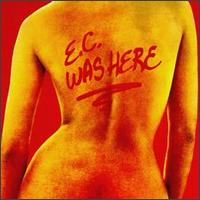
Year Of Release: 1975
Record rating = 9
Overall rating = 12
Terrific live sound: Eric never loses it!
Best song: HAVE YOU EVER LOVED A WOMAN
Track listing: 1) Have You Ever Loved A Woman; 2) Presence Of The Lord; 3) Drifting Blues; 4) Can't Find My Way Home; 5) Rambling On My Mind; 6) Further On Up The Road.
Here's some advice for you: if you're not the one who's ready to lick Eric's toes even when he's doing trash like 'Behind The Mask' or 'River Of Tears', you might dismiss any of his studio albums (you'd be making a mistake, of course, but not a fatal one), but don't you miss the live ones. It's just such a rare example of a career when most of the live performances are way, way above the studio recordings. You see, Eric might have abandoned his earlier experimentative efforts and his crafted guitarplayership on his recent releases, but he was still giving it away on concerts, and for once the record company had made a wise decision to go ahead and release a live album in addition to his last melting pot of gospel, balladeering and 'soft blues'. In doing so, they probably produced Eric's best ever solo concert album since 1973 - E. C. Was Here captures the man with his dextrous American backing band in particularly good form, and the sound is raw and fresh if compared to later live releases like Just One Night and 24 Nights, where the production and arranging would be a bit too sterile for my - and everybody else's - tastes. Unfortunately, this one boasts just six tracks, and even the recent re-release hasn't beefed up the number (they did reinstate 'Drifting' to the original eleven minutes version, though).
But even so, that doesn't mean you don't have to enjoy the album. Most of the songs you know already, but some of them take on a different life. First of all, the record has the definite version of 'Have You Ever Loved A Woman', the least stereotypic, the most inventive one. The way Eric abrupts the verses and lets the guitar end the phrase that began life as a sung one is incredible - it's like a self-dialog between a man and his guitar. It does throw you a bit off balance at first when after the George Terry-Eric soloing duet Eric goes "George Terry, please... so much! and you know you can't leave her 'lone", but soon you'll get used to it - sheer genius. And the actual fencing guitar-match is nothing short of breathtaking: Terry might not have been as talented, but he was a perfect base for Eric to lean upon and entwine his own soloing around his guitar.
Then there's a good version of 'Presence Of The Lord' with Yvonne Elliman helping Eric to pull off the singing without much pain (like on Live At The Fillmore). This version, unfortunately, is far from the definite one - Yvonne also renders this song much more generic with her soul singing, and the way they stretch out the verses, playing the song twice as slow as the original, is uncomfy, but it's all compensated by the searing solo in the middle; Eric simply can't go wrong on that one. In any case, notice the huge differences in his current singing: four years ago, the song would be sung completely off key, but now Mr Clapton is fully confident, and while he overemotes a bit on the opening lines, it's a great pleasure to hear him wallow in his newly-found vocal strength.
The currently-eleven minutes 'Drifting Blues' is okay: overlong, maybe, but certainly pleasant. It's actually a demonstration of how even an 'average' Clapton jam might be a great experience if you let yourself be carried away with it: I can't help but admire the man's inventiveness and expressivity which he achieves even without applying any of his ultra-complicated playing techniques. These solos flow around you so flawlessly, seamlessly, effortlessly, they seem so natural and, hell, rational without the least sign of self-indulgence that all of the song's eleven minutes just pass by like it were three or four. The brilliant change of guitar tones alone is worth a fortune. Wonder why Eric felt a need to insert a couple of verses from 'Ramblin' On My Mind' if he also got to perform the song separately?
'Can't Find My Way Home', one of the best tunes on Blind Faith, again has Yvonne doing most of the singing job, and Clapton shines on the acoustic. And the record ends with a couple more highlights: growling, menacing, magnificently built 'Rambling On My Mind' (don't these opening notes send a shiver down your spine?) and a jolly good and fast version of the old R'n'B tune 'Further On Up The Road' which would become a stage favourite from now on.
The record does show a serious change of style from Eric's 'classic' live period in the Dominos, of course. Like I already mentioned, his guitarwork is somewhat more restrained: certainly far more prominent than on contemporary studio records, but lacking the flashiness, speed and recklessness of old. He also relies far less on various special effects - for instance, the once so beloved wah-wah is completely forgotten (it would resurface later, but only in a limited number of occasions), and the tones he chooses are softer and more 'inoffensive' than before. On the other hand, the album has a charm of its own that's lacking on the "rougher" records - Eric's blistering minimalism on 'Ramblin' On My Mind' and 'Drifting' is a perfect example of achieving so much with so little.
The only deeply strange thing about the album is its cover - and to make matters even more bizarre, the back cover features a close-up of the same female's BUTTS. Rarely have I seen such a gruesome "non-matching" of a record and its sleeve. Wonder what the producers were thinking? Especially since Eric never ever was intended to be marketed as a "raunchy one". Somebody got stoned, most probably.

Year Of Release: 1976
Record rating = 6
Overall rating = 9
A Band album. A Dylan album. A Marcy Levy album. Eric Clapton? Who's that?
Best song: SIGN LANGUAGE
Track listing: 1) Beautiful Thing; 2) Carnival; 3) Sign Language; 4) County Jail Blues; 5) All Our Past Times; 6) Hello Old Friend; 7) Double Trouble; 8) Innocent Times; 9) Hungry; 10) Black Summer Rain; 11) Last Night.
This is not exactly a bad record, and it has its share of nice tasty numbers that are worth memorizing - however, apart from the cover of 'Double Trouble', none of these songs lasted long as stage favourites, and it's easy to see why. Sadly, the true Eric Clapton is not to be found on this album: more precisely, you have to really dig deep in order to dig out some true Eric Clapton, and you could easily spare yourself the challenge and just go back to Layla or even Ocean Boulevard. I mean, yeah, some of the music is endurable, but can't you see it's not Eric? Just look at the credits: The Band, Ronnie Wood, Dylan, Jesse Ed Davis and tons and tons of session musicians. Even Georgie Fame. Eric is simply lost among this sea of guests. As if this wasn't enough, check the authorship. Most of the tracks on here are either Dylan songs or Band songs, or, at worst, Marcy Levy songs, which is no reassuring news, either. After all, this is the same Marcy Levy that later formed Shakespeare's Sister, remember? Ggggggod...
Seriously, while over time I have come to appreciate this record more (as was the case with most Seventies' Clapton records that are in any case bound to grow on you like no other roots rock artist creations can), this is undoubtedly Eric's worst offering of the decade. The whole event took place in the Band's studio which had once been a bordello (sic!) and that's very symbolizing - this is a mess. Not exactly a drunken one, but stuff like 'Carnival' does hint a bit at certain intoxicating devices. And while I respect the Band and like a lot of their material, I simply like Clapton better. And what about expectations? I expect guitar and what do I get? Marcy Levy singing gospel and Robbie Robertson taking over most of the lead work? CRAP! Probably the only track that comes close to a real Clapton number is the traditional blues 'Double Trouble'. It's guitarry, dark, bluesy and nice, a typical classy Clapton blues number, but jammed in between all these country/gospel excourses, it sounds pathetically out of place. And besides, it's still inferior to the live recording found on Just One Night.
Okay, once you've finally assumed the idea that it's not really a Clapton album, some other songs prove valid as well. A real highlight on here is Dylan's 'Sign Language', a humble, emotional folkish ditty where Dylan himself joins Eric in a fascinating vocal duet. As far as I understand, this initiates a short series of Dylan songs that he donated specially to Eric, so Dylan fans take heed: Clapton's not exactly the greatest performer of Dylan songs ('Knockin' On Heaven's Door'? No, it was a good version, but why the hell did Eric's reggaeified take on it completely usher out the far superior original out of people's minds? And don't you get me started on 'All Along The Watchtower'... oh, that was Hendrix's, sorry. Big deal anyway), but in those cases when the exact Dylan song exists exclusively in a Clapton version, it's mostly excellent, and 'Sign Language' is just it. Another relative highlight is the Band's 'All Our Past Times', in parts sung by the Band themselves; a live version of it can be found on Just One Night, meaning that the song meant enough to Eric so as not to be relinquished right after being recorded. Still, it's hardly on par with the Band's better material. Finally, Eric's own 'Hello Old Friend' is simple, catchy and listenable. Great pedal steel on there, beautiful 'waves' of friendly sound rushing in on you. Mmm. Tasty stuff.
But the rest of the songs are almost unbearably second-, if not third-rate. Marcy Levy sings lead vocals on the atrociously generic gospel anthem 'Innocent Times', only to prove that she can hardly match Yvonne Elliman's deep, but effortless chanting; poor Marcy simply screams her head off in a fit of hysterics. The silly drunken jam 'Carnival' which I have already mentioned goes nowhere in particular. The opening 'Beautiful Thing' (yet another Band song) is a sloppy, slow, druggy mess that goes straight down the bog. And the final tracks are so bland and insipid I won't even bother naming them. If you're a great Band fan who digs everything they ever put out, or if you ever fell under the charm of Shakespeare's Sister, you might enjoy this album. Me? I hardly qualify.
The public was definitely not amused either, and Eric fell under a heavy critical barrage this time. Deservingly so. You see, he might have betrayed his guitar hero image two years ago, but at least on those last two albums he demonstrated some decent songwriting capability (particularly in the songwriting department - 'Let It Grow' and 'Better Make It Through Today' are, after all, two of the most charming ballads he ever put out) and, what's more important, he hasn't completely given up on the guitar; rather, he switched it from 'maximalist' to 'minimalist' mood, fiddling around with different tones and sparse arrangements and economic, but complex chord patterns. It was certainly a mistake, but not a crucial one. No Reason To Cry, however, shows us a Clapton who gives up on guitar altogether, completely and absolutely. He was just so happy to be recording with the Band that he didn't give a damn and threw everything away. Result? One of the most generic and wretched albums of his career. Fortunately, he'd come to his senses next year.

Year Of Release: 1977
Record rating = 9
Overall rating = 12
A fine effort, one of his best and maybe one of his most independent. Which is a bonus.
Best song: COCAINE
Track listing: 1) Cocaine; 2) Wonderful Tonight; 3) Lay Down Sally; 4) Next Time You See Her; 5) We're All The Way; 6) The Core; 7) May You Never; 8) Mean Old Frisco; 9) Peaches And Diesel.
All I know is that this time Eric didn't mess around with gospel or reggae, and he didn't invite no Robbie Robertson to hang around either. Moreover, the guy he DID decide to hang around with was Glyn Johns (the one who produced Who's Next, remember?), and that meant hard work, no partying, and a sense of purpose that somehow was completely lost on the previous occasion. And the purpose was: to record a good, no bullshit rockin' album for the first time in seven years. And, quite marvelously, he succeeded: Slowhand is such a high point that it helped wrench his reputation out of decline and hold it more or less high for at least half a decade, when it finally became obvious that the glorious shadow of this album was no longer hanging over his head. It ain't no great shakes in terms of innovation or originality, of course, but it helped stabilize the Clapton sound and finally gave him a mighty foundation to work on in the future.
All of the tunes on here are good, and about half of them downright great - it's no wonder that the opening three tracks were all superhits and stage favourites. J. J. Cale's 'Cocaine', though a far cry from his blistering rockers on the Dominos records, is still menacing enough, with a cool ponderous riff; his muffled vocals are a real threat, and the overdubbed symphony of solos is the closest he ever got to replicating his Cream formula. In fact, with a little tweaking of the guitar tones and a Jack Bruce added on bass, this could have easily graced any decent Cream album, no matter how much radio overplay has obliterated the song's initial charm. The super-sweet 'Wonderful Tonight' probably needs no introduction; for me, the song doesn't hold quite so well as for innocent romantics all over the world, but I simply adore the guitar line it's built upon (strange enough, Eric never could, or would, manage to exactly replicate it in concert; that's why the song is one of the few numbers of his that don't work live nearly as well as in the studio version). Yes, it's prime "adult contemporary", but give the guy some credit - a less sharper person would treat the song in the same way but omit that cool guitar line and ruin everything. And the fast countryish 'Lay Down Sally' has a fine minimalistic solo that sounds almost like Knopfler (which is no surprise since Clapton and Knopfler borrowed quite a lot from each other). For some strange reason that has always escaped me, though, 'Lay Down Sally' is often used as the ultimate argument to condemn Clapton's 'white boy blues' playing. So what? Admittedly, he doesn't play the song like a black bluesman. He plays it like a white bluesman. And? It's still fast, minimalistic, soothing, and sharp at the same time. Do you have a problem with that, all you Clapton-haters? Not me.
Anyway, all the three songs are radio hits, of course, so you're probably already sick of 'em, unlike the clever me that never listens to the radio. But what about the others? A couple more groovy rockers: the eight-minute 'The Core' has one more superriff, fine guitar and sax battles and well-constructed vocals that sometimes get on your nerves (courtesy of Marcy Levy), but in any case, the 'sung part' is mainly just used as an introduction for the main jam which almost returns us to the good old days of the Dominos for a moment. And the cover of Crudup's 'Mean Old Frisco' is so hilariously moody, it totally obliterates similar efforts like 'Steady Rollin' Man' or 'Willie And The Hand Jive'.
Then there are two more country shuffles, one of which is great ('Next Time You See Her' - terrific catchy chorus and an unimaginably warm guitar tone) and the other one is pleasantly okay ('We're All The Way' - a bit too sappy, but Clapton's acoustic ballads do tend to be sappy). And finally, so as to let me know the album shouldn't deserve the same recognition as Layla, they decided to include one really suckin' soft rock ballad whose presence is rendered totally unnecessary by the superior 'Wonderful Tonight' ('May You Never'). Oh, and did you know Eric made up 'Wonderful Tonight' while waiting for Patti ex-Harrison trying on her dresses? She probably took quite a long time, as the instrumental 'Peaches And Diesel' that closes the album has almost the same melody. The only difference is that it's less sweet, more guitar-based and devoid of sentimental saccharine lyrics. So it's actually better.
A fine, rewarding album. Of course, Eric was inspired at the moment, but I really think the album's secret lies in his temporary taking off the mask he'd been wearing for three years already and following his own true nature. That's why his live albums are usually better than the studio ones - on stage Eric is always Eric, while in the studio he's either Phil Collins or Marcy Levy or Bob Marley or just Greg Phillinganes (yuck). He managed to be Eric for Slowhand. Sure he's not ripping it apart, off, out or in as in the early years, but you gotta remember his last studio album was No Reason To Cry. I mean, it is a big improvement, and probably one of the most listenable albums of 1977. If you're not a punk fan, of course.
Oh, and the album title - in case you didn't know that - just refers to Eric's 'classic' nickname, the one he earned even before 'God'. Rather ironic, isn't it? Of course, he's not exactly the main icon upon which all speedy players are measured, but he does know how to play really fast...
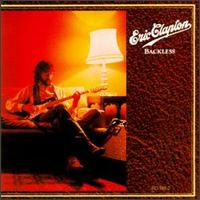
Year Of Release: 1978
Record rating = 8
Overall rating = 11
More of the same, a little weaker, p'raps, but not such a slump as everybody suggests.
Best song: TULSA TIME
Track listing: 1) Walk Out In The Rain; 2) Watch Out For Lucy; 3) I'll Make Love To You Anytime; 4) Roll It; 5) Tell Me That You Love Me; 6) If I Don't Be There By Morning; 7) Early In The Morning; 8) Promises; 9) Golden Ring; 10) Tulsa Time.
Of course, nobody could expect another Slowhand from Eric; but I honestly feel that this record has undergone the most severe underrating in the entire Clapton catalog, suffering from the 'good album after great album' complex. It's nothing but a collection of rag-taggy blues covers, saloon boogie music and sentimental pop balladeering with a huge country feel to it, but isn't that what Seventies Clapton is all about? And since it is, I might also add that this is one of the better efforts, because this is a very balanced album. First of all, just like Slowhand, it includes no stupid reggae or gospel excourses, so most of the war is fought on familiar territory. Second, the amount of diversity is satisfying (it doesn't sound like all the songs are Band covers). Finally, there's only a tiny-weeny bit of banal sentimentality that was slowly creeping in on Eric. Yes, the album hasn't produced even a single crowd-pleasing hit (whereas Slowhand produced a grand total of three), but what do I care? How many crowd-pleasing hits can one guy with average songwriting talents get in a decade, goddammit? And then again, some might actually like the album better simply because it doesn't have 'Wonderful Tonight' on it.
There's one serious problem, tho'. Jes' one. Most of the time it feels like the whole band, Eric included, is recording these songs in a steady slumber. Either the production here was muddy, or the band members were totally uninspired, thinking of wages and relaxation while punching drums or picking guitars or snorting their morning doses of coke, or all of it, but there's not even a slight tinge of real non-simulated energy anywhere. This makes the record a perfect candidate for your turntable whenever you feel relaxed and tired but still want to put on something more artistically valuable than Mariah Carey; however, it should be a very unlucky place to, say, get initiated with Eric's career. Even the faster numbers seem dreamy; as for the slower numbers, well, you'd thought there was a hypnotist in the studio!! Eric is probably also responsible for it - the guitarwork seems a bit too sludgy compared to the album's predecessor, without any interesting overdubbing (as on 'Cocaine') or particularly impressive solo runs.
Nevertheless, there are little cute mini-gems all over the record. J. J. Cale's 'I'll Make Love To You Anytime' is so moody, sung by Eric in a low growl, that I enjoy it quite a lot: had it been a little energized, it could have easily beaten out 'Cocaine'. The wah-wah tone on the song is great anyway. Did the guy ever do this live? I'd sure be interested in a bootleg... The countryish 'Promises' is a fabulous ballad, one of Eric's best, no doubt, with tasty dobro backing and charming backing vocals by Marcy Levy who manages to insert herself into the last line of the chorus almost surreptitiously. It's a bit in the vein of 'Lay Down Sally', but less evidently bluesy, more of a heartfelt thing than a minimalistic tongue-in-cheek groove (which 'Lay Down Sally' was. You know what a minimalistic tongue-in-cheek groove is, right? Ever heard Yes' Tales Of Topographic Oceans? It's the exact opposite).
Coming back to our senses and to the rougher side of Mr Clapton ('rough' as opposed to 'balladeering', of course, as nothing on here is or could be as rough as, say, Motorhead), 'Tulsa Time' is one of Eric's best country rock variations, although it would really only come to proper life onstage, with Chris Stainton's ferocious piano runs nearly outbeating the master himself. And the minor numbers are all pleasant: two average Dylan covers still groove along nicely (and actually, they're far superior to the songs that Mr Zimmerman was recording for himself at the time; what a beautiful case of altruistic intentions), 'Roll It' has an impressive riff and really highlights Marcy's vocals, and 'Golden Ring' is... well... it's okay.
The funniest thing is that the only song I'm not particularly fond of on the album is 'Early In The Morning', its only generic blues cover. I do hear that Eric is trying to make it work, but it doesn't. His solos are weak, his vocals are almost stuttering, and the band walks along as in a fog. I mean, it was 1978 for Chrissake; we'd heard enough generic Clapton blues numbers, and hey Eric, if you're gonna put a seven-minute long song on an album, you'd better make sure it stands out in some way. If it doesn't, I have no use for it whatsoever. I wonder if they were all on heroin in the studio? Didn't Carl Radle die of a drug overdose in the near future? There are also a couple passable shuffles, like the pedestrian ballad 'Tell Me That You Love Me', but these are so short they're practically inoffensive, so 'Early In The Morning' still remains the weakest link in the chain.
In general, this album does work. It has its reservations, but it's not half bad. It also does a good job of lulling you to sleep, but it isn't the kind of Yes dentistry that plunges you into nightmares. Rather it is a soft, sweet sleep with a smile on your face and a relief in your heart. The album cover is quite suitable, too: Eric sitting in a dimly-lit room on a sofa and lazily picking his guitar. Yaawn. What a fine album. What were these stupid critics thinking, I wonder?

Year Of Release: 1980
Record rating = 8
Overall rating = 11
Sometimes it seems Eric is backed by a couple of robots, but it don't matter much. He's alive!!
Best song: BLUES POWER
Track listing: CD I: 1) Tulsa Time; 2) Early In The Morning; 3) Lay Down Sally; 4) Wonderful Tonight; 5) If I Don't Be There By Morning; 6) Worried Life Blues; 7) All Our Past Times; 8) After Midnight;
CD II: 1) Double Trouble; 2) Setting Me Up; 3) Blues Power; 4) Rambling On My Mind; 5) Cocaine; 6) Further On Up The Road.
E. C. Was Here was a fine live album, but probably too short for most tastes. After all, one thing Eric has certainly inherited from his Cream and Dominos past is that most of the songs should be performed in long versions, and this ain't exactly appropriate for a single LP. To correct that mistake, Just One Night was made a double album, recorded actually over two nights of Eric performances at Budokan, Tokyo, and the number of songs is significantly increased.
However, apart from that, there is one major difference that shouldn't be overlooked. By 1979 Eric has finally fired his American band because of its evident stagnation and all kinds of personal problems, and hired an English one instead. All of the players are professional, especially Henry Spinetti on drums and Albert Lee on second lead, but they just seem a bit too professional: the playing is so tight there's very little room for any jamming or improvisation. In other words, Just One Night effectively cancels any hope at real true band interplay. Remember how the Dominos, for instance, used to thrill you with their great integrated sound? That sound was relatively stripped down, of course, with Clapton the only true soloist, but it never seemed self-indulgent because the others were there to actually contribute to the sound and atmosphere as full-fledged partners. Here, way too often it seems like Clapton's backing band is only there, well, to back him and nothing else. Of course, you could argue that Mr Shyness Itself is very keen on handling the right to solo to his colleagues, so that in the end we have a lot of good, but unnecessary solos by Chris Stainton (keyboards, ex-Joe Cocker's Grease Band) and Albert Lee. But it's almost like a toss-off, in fact, this is a really indulgent approach: 'okay guys, I wanna show that we're all partners and you're not just there to be my slaves, so come up to the ramp and let 'em have it'.
This is my - and everybody else's - main complaint, and it mars the excitement indeed. Ironically, though, Clapton himself is in top form, particularly on some of the extended performances, and therefore, in order to really appreciate the record, one needs to be able to fully concentrate on Eric's work and forget about the others. It isn't always that easy to do, of course, what with such pointless inclusions as a version of Dire Straits' 'Setting Me Up' (Albert Lee's vocal highlight!) and all, but eventually it becomes possible.
The first LP doesn't exactly live up to the hype, though - over the years, I have come to view it as some kind of warming-up 'introduction' for the far superior second half. The only highlights on there are the trad. blues cover of 'Worried Life Blues', which can do no wrong, and a really ferocious, driving version of 'After Midnight' where Eric finally whips out the wah-wah and tears out a blazing solo. Everything else is good, but unspectacular: the band does the standard Slowhand set ('Lay Down Sally' and 'Wonderful Tonight'), some recent hits from Backless (the opening 'Tulsa Time' with great piano from Chris Stainton, but a very moderate Eric performance; 'Early In The Morning'; 'If I Don't Be There By Morning' with solos by everyone except Eric) and - fancy that! - even a No Reason To Cry ditty ('All Our Past Times'). None of these songs can hope to surpass the studio versions, and, although I think I've already mentioned that earlier, the live 'Wonderful Tonight' has always been a great disappointment to me because the song owes everything to that haunting guitar riff, and for some reason Eric has never been able - or never wanted? - to reproduce the exact same syncopated riff onstage, always drawing it out and making it fatter and slower as if he were offering it to the public, you know, 'here is your favourite melody, guys and girls, I have slowed it down and dissected it for you to view and caress and alleviate your emotional centers'. This has always angered me.
So I'm just patiently waiting for the second half where all the real fireworks start. Apart from the wretched 'Setting Me Up', these are five lengthy, drawn-out tracks, all of which qualify. 'Rambling On My Mind' gets a mid-section of 'Have You Ever Loved A Woman' and works exceedingly well; 'Cocaine', by now transformed into Clapton's arena-rock showcase, is less subtle but even more powerful than in the studio; and the closing 'Further Up On The Road' is so tight and energetic I could almost take back my former accusations of the band.
Even so, all of that doesn't make the album deserve more than a strong overall ten; what pushes it over the eleven-mark border are the stunning, definitive live versions of 'Double Trouble' and 'Blues Power'. Now this is what all the radio stations should be transmitting over the waves instead of all that recent techno crap Eric got himself into - and who the heck cares if they're both eight minutes long? 'Double Trouble' shows Eric at his 'miminalistic best': probably having taken a few lessons from Mark Knopfler, he transforms the piece into a thrilling, atmospheric dirge playing his heart out in series of quiet snappy licks that one can only truly appreciate in headphones with the volume turned up to the max. The guitar doesn't just 'weep' on there - it almost seems to be agonizing, but it's a quiet, concealed sort of agony which only makes the sensation more creepy... and beautiful in its creepiness.
'Blues Power', on the other hand, shows Eric at his 'maximalistic best'. The version is also far tighter (and faster) than the original, and Spinetti and Stainton hold up the rhythm perfectly, but what really makes the grade is Eric's wah-wah solo that I'd personally have to count as one of his very best, and arguably the best of those 'technical' wah-wah solos (as opposed to 'purely emotional') I've ever heard. He weaves his fast, fluent, finger-flashing patterns around the rhythms of the band in such a way you'd never believe was possible, throwing out riffs, staccatos, arpeggios and [add your favourite guitar term here, I suppose anything will do] like crazy, and it never seems self-indulgent, not for a single moment! Unfortunately, it's only about four or five minutes long... dammit, I would have easily appreciated another ten or fifteen minutes or so. And each time I listen to the song, I keep getting sad realizing that nobody ever really heard that stuff - no sane person would be able to dismiss Eric as a great guitar player after hearing that one...
All in all, a very uneven live album, but the high points are so tremendously high it's an absolute must for hardcore Eric fans... and a very recommendable buy for Eric novices, too. Although, of course, the problem with Eric is that all of his live albums are worth buying - and you never really know where to start.
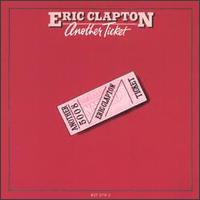
Year Of Release: 1981
Record rating = 8
Overall rating = 11
A bit more guitar than usual, so I wouldn't say it sucks.
Best song: RITA MAE
Track listing: 1) Something Special; 2) Black Rose; 3) Blow Wind Blow; 4) Another Ticket; 5) I Can't Stand It; 6) Hold Me Lord; 7) Floating Bridge; 8) Catch Me If You Can; 9) Rita Mae.
Not bad for a standard "oh-no-solo" Clapton album. In fact... hey, what's that I'm saying? It is a very good album, a conscious return to the ideals of 461 Ocean Boulevard: lots of neat little country-rock and blues-rock melodies that are all well-written and well-performed, evading both lengthy uncocentrated jams and sappy adult pop. The good news is that while Eric's newly-assembled British band wasn't that much of a consolation in the live environment, its presence in the studio apparently reinvigorated Clapton, and inspired him to take the reins into his own hands and deliver his most serious and independent effort of the Eighties; in fact, he would never again sound so independent and artistically free until thirteen years later, when From The Cradle briefly brought him back into the creative saddle again.
Too bad he didn't have much time to celebrate this return to form: due to a nasty ulcer, he had to cancel the ensuing tour and the record never got much publicity, becoming yet another 'obscure gem' in the man's catalog - who knows, perhaps had the album been appreciated more, Warner Brothers wouldn't have found it necessary to 'prop' the man up with Phil Collins as producer. But history knows no ifs; the only thing we can do nowadays is correct the little historical bluntness by buying this album, and if you like Eric Clapton, you won't regret it.
Not that outside influences are entirely lacking here: Eric always needed a helping hand in the studio to find inspiration, be it Jack Bruce, Duane Allman or (yuck) Marcy Levy; Another Ticket is no exception, having been recorded with ex-Procol Harum leader Gary Brooker, and you could argue that in parts, the record is more Gary than Eric - but I think you'd be wrong. Gary's keyboard work is excellent, but Another Ticket is essentially pure Eric, that vintage E.C. you'd be able to recognize anywhere. Tasty guitar licks, slightly muffled guitar tones, heartfelt vocal intonations, and even a few extended solos in certain spots - although, true to his no-hero image, Eric takes special care not to make his guitar overshadow everything else.
As usual, we have a bit of blues - Muddy's "Blow Wind Blow", in a fast tempo, good guitar and Eric in a top form; and Elmore James' "Floating Bridge", performed a bit too slow for me, but Eric always had a passion for super-slow blues, and plus, it's performed in the same minimalistic way that Eric was developing on his last tour. This gives you a great opportunity to sit back and savour every lick - what could be more delicious? Yummy!
But, as is usual for Eric's studio albums, the blues numbers are ultimately overshadowed by the poppy-boppy substance. The ballads are all (both) good. 'Something Special' is country-pop with a little twist of humour - 'she ain't too pretty, she ain't too tall, in fact she ain't too much of anything at all' and a warm echoey guitar tone that's not exactly generic. The title track is very long, very sentimental and very fake, awash in synthesizer backgrounds that make it as close to adult pop as possible, but it's still salvaged by a couple 'Wonderful Tonight'-stylized riffs (in fact, I have a hypothesis that Clapton's later intro to the live performances of 'WT' was reworked from this tune) and a beautiful, beautiful, gorgeous vocal delivery that Phil Collins with all of his vocal wizardry could never have pulled off. Plus, if you're really pissed off about the poopification of Eric's ensuing career, I suppose you'll just have to take the lyrics like 'why can't it stay like this forever, why does it always have to change?' to heart. Deeply.
Excellent gospel-pop like 'Hold Me Lord', drenched in classic slide guitars, and hook-filled simplistic pop numbers like 'Catch Me If You Can' and 'I Can't Stand It' are also memorable and stand up pretty well against any 'simpler' material Eric had penned before. 'I Can't Stand It' was even a minor hit single, although it didn't exactly help save Eric's reputation in the long run. And even when you feel like he's getting too generic, with the country stomper 'Black Rose', he still saves the day with a cool catchy chorus.
My personal favourite here, though, is the closing thunderstorm of "Rita Mae": it is absolutely incompatible with the rest of the album and rightly so. Incredible, ferocious drumming from Henri Spinetti, a breakneck tempo, Eric's soaring guitar and lots of other things really make this number a highlight. Good old rocker. The only problem is that Eric's guitar is mixed far too low: he probably made this to decrease the effect of his solo playing, and he succeeded. Even if you raise your volume level to the very top, what you'll get will still be a band sound. But is it really bad? The band kicks ass! The band kicks ass as never before on a studio record since... heck, I don't even remember since when. Since Layla, probably.
One last warning, though: if you're one of those guys who hates solo Clapton except for a bunch of the really good stuff, don't bother about digging here. In general, Another Ticket is JUST another solo Clapton record, not objectively different from any other one. It's just that it's far more consistent. Therefore, if "country rock" and "soft rock" are the Gog and Magog of music for you, I doubt you'll like it more than No Reason To Cry, for instance. So what's the answer? Why, bring on the eclectic connoisseurs, of course!

Year Of Release: 1983
Record rating = 6
Overall rating = 9
Not bad. Not excellent. Nice rockin' shuffles, a bit insipid and overcommercialized, though.
Best song: PRETTY GIRL
Track listing: 1) Everybody Oughta Make A Change; 2) The Shape You're In; 3) Ain't Going Down; 4) I've Got A Rock 'N' Roll Heart; 5) Man Overboard; 6) Pretty Girl; 7) Man In Love; 8) Crosscut Saw; 9) Slow Down Linda; 10) Crazy Country Hop.
An album about nothing. Yeah, well, Eric's been pretty much doing 'albums about nothing' since 1974, but for some reason, Money And Cigarettes has managed to establish itself in my mind as the quintessential 'having a good time' album for Eric, even more so than the Band-esque, carnivalesque No Reason To Cry. That's not exactly denigrating, though - there have been plenty of 'having a good time' albums made in this world that are wonderful to listen to. The good thing is that when Eric is not burdened by some 'idea' or general style requirements, he tends to wrok good; the bad thing is that this was his first album for Warner Brothers, and it initiated the man's commercial downfall. It's perfectly enjoyable and all, but if you want to dig deep to discover the roots of Pilgrim, 1983 is arguably the year to start counting from.
Basically, Eric just got together with Ry Cooder and some friends and just had a little fun. (Interesting note - the "fun" was actually not working out, and it only worked out after Eric fired Gary Brooker and Henry Spinetti from the sessions. Seems like not everybody can have fun when ordered to). The result is a totally uncontrolled record, with not a bluesy tune in sight: the originals are pop and the covers are mostly old country and soft rock covers. Jimmy Buffett and the Eagles would have been proud. The musicianship is pretty nice, and Tom Dowd actually makes sure that all the Eighties' production trends are carefully avoided - a thing he would not be able to control on further releases, unfortunately. But still, this is very sterile for a 'lightweight' record. Probably has to do with the fact that Eric quit drinking. No, I'm glad he quit drinking, but don't tell that to Clapton haters, or they'll start putting out all those sneering remarks like 'Having stopped drinking, maybe it would be a good idea to stop playing as well?'
The album opens with a promising, if somewhat soulless, half-blues version of Sleepy John Estes' 'Everybody Oughta Make A Change' and becomes your average background music soon afterwards. I really doubt that Eric had any real interest in making this album, so uninspired it sounds. It does have some highlights, though. 'The Shape You're In' is a pretty solid rocker with enough drive to justify its existence. The ballad 'Pretty Girl' is nice, with an atmospheric dreamy guitar melody and one of Eric's catchiest vocal melodies; hardly great and certainly nowhere near as 'epic' in scale as 'Wonderful Tonight', but proof enough that at this point Eric was still able to write interesting ballads instead of dreck like 'River Of Tears'. The traditional number 'Crosscut Saw' is vaguely entertaining and 'Man Overboard' is such an obvious mainstream pop number that it gets memorable at least because of the very fact. 'I'm like a man on fire, man on fire, man overboard, man overboard' - imagine Eric singing such a line somewhere around 1966? Hah! I gotta give it to him, though: the song is really well put together, and as far as inoffensive poppy ditties go, it's a really nice try on Eric's part.
I'm also a little bit partial to the ferociously rockin' number 'Ain't Going Down', by far the only 'biting' track on the album, with fast, cathartic solos and a driving beat... the big problem about the song is that it almost completely rips-off 'All Along The Watchtower' in its Hendrix incarnation - everything but the chorus is directly lifted from that number. Wonder why Eric didn't get sued.
The other tunes are, well, nothing special, ranging from normal to really, really bad (you'd never think that a song called 'I've Got A Rock'n'Roll Heart' could be a poorly written and sloppily performed pop ditty without hooks, energy, sincerity, without anything). And the album closes with a cover of J. Otis' 'Crazy Country Hop' (in case you're not familiar with the song, and you really shouldn't be, Eric Burdon sang a small bit of it in 'The Story Of Bo Diddley'). If I didn't know it was recorded for this album, I'd only be able to imagine Eric performing this song in punishment for his committing murder in the first degree or something worse...
The funny thing is, if you look closely at the track listing, you'll see that the best songs on here - 'The Shape You're In', 'Man Overboard', 'Pretty Girl', 'Ain't Going Down' if you disregard the Hendrix/Dylan rip-off - are all written by Eric, and the bluesy and countryish covers mostly suck. Could this be the sign of Eric's final and total maturation into a professional songwriter? Or maybe, on the contrary, it is a sign of Eric's shameful mellowing out and being sucked into the mainstream, slowly betraying his blues heritage and quickly rolling down into the bog of adult contemporary? You could take it either way. Fact is, this phenomenon would become a regularity for all of Eric's further Eighties' albums, all of 'em without exception. His blues legacy would rebound on Unplugged and especially From The Cradle, but that would be a long time from now... and not for that long, either.

Year Of Release: 1985
Record rating = 4
Overall rating = 7
Phil Collins-produced garbage. Recommended only for huge fans of both.
Best song: SAME OLD BLUES
Track listing: 1) She's Waiting; 2) See What Love Can Do; 3) Same Old Blues; 4) Knock On Wood; 5) Something's Happening; 6) Forever Man; 7) It All Depends; 8) Tangled In Love; 9) Never Make You Cry; 10) Just Like A Prisoner; 11) Behind The Sun.
Pathetic. Warner Brothers were dismayed with the fact Clapton records didn't sell, so in a desperate move both wise and foolish at the time they called on Mr Eighties Popmaker to save the situation. Wise, because Phil was really known for his ability to turn everything into gold (literally), starting with his own solo albums, continuing with Genesis records and probably everything else which he was able to lay his hands upon. I don't know whether Collins-treated artists used to shoot themselves with any significant regularity, but if did, at least they could hope for a decent funeral and a well-off future for their families. Well, expectations didn't fail Warner Brothers, 'cause this one seemed to have been a best-seller, as well as its follow-up, August (released in 1986; I absolutely refuse to pick it up until I see it really cheap). Warner Brothers could sleep safely.
In the long run, although, the decision seems to have been more than stupid. Marring Clapton's reputation in such a terrible way seems to have been a fatal mistake, even though Eric himself didn't seem to mind then (in fact, his collaboration with Collins has even outlasted the 1985-86 period) and doesn't seem to mind now (Collins influences can be seen directly in the music of Pilgrim). This record doesn't feature too much guitars, and even when it does, you can hardly hear them because of all the corny synths and electronic drums. Ninety percent of all the songs are openly commercial, no matter how Eric might defend them. Even if I won't be heard saying 'this is a Phil Collins album with Clapton guest starring', I won't be saying that this is Eric's album either. There's exactly one number that sounds at least close to the Eric of old - the lengthy 'Same Old Blues' with an inspired guitar solo, and the general bluesy atmosphere even makes one forget the synths and electronic drums.
And the others? Cheesy banal pop in the general Eighties vibe ('She's Waiting'; the atrocious 'See What Love Can Do'); cheesy banal pop with bluesy pretensions that don't work ('Just Like A Prisoner'; so what if Eric soloes like a demon? it's still a synth-driven pop ditty); generic bland balladeering with debilizingly straight lyrics ('It All Depends'; don't you want to go to the bathroom when you hear a line like 'So you think you are something special/I wonder why, baby, is that so?'); and disco numbers disguised as blues once again ('Forever Man'). Ultra-sweet ballads like 'Never Make You Cry' really show how low the mighty have fallen. Fortunately enough, the record ends with a lovely acoustic ballad (title track) that, controversially, is also the shortest. This one, 'Same Old Blues', and occasional great guitar licks are the only things that redeem this album. The rest stinks worse than a Russian village toilet.

Year Of Release: 1986
Record rating = 3
Overall rating = 6
More Phil Collins-produced garbage, but this time I won't even recommend it to my worst enemy.
Best song: HOLY MOTHER
Track listing: 1) It's In The Way That You Use It; 2) Run; 3) Tearing Us Apart; 4) Bad Influence; 5) Walk Away; 6) Hung Up On Your Love; 7) Take A Chance; 8) Hold On; 9) Miss You; 10) Holy Mother; 11) Behind The Mask; 12) Grand Illusion.
It's hard to imagine a record that could be worse than Behind The Sun, yet Eric managed it (and he would again overdo himself twelve years later with Pilgrim). Ninety percent of this stuff, again produced by the artist-murderer Phil Collins, is dull, faceless mid-Eighties 'modern sound'-enhanced schlock that really and truly has nothing to do with Clapton at all. He probably didn't really give a damn at this point, being more pre-occupied with the birth of his son (the album's title commemorates the month of his birth) that, unfortunately, would come to an untimely end just four or five years later. For the time being, though, Eric was really happy and good-tempered, which meant 'you guys do all the stuff and I'll sing it, probably throw in a couple guitar licks too'. To be honest, half of these twelve numbers do sport Clapton's name on 'em; but there's not even a single solo composition - all are written in collaboration, with either Collins himself or keyboard player Greg Phillinganes (a particularly annoyingly sounding guy) or some gentlemen who I don't know especially well and wouldn't want to. Needless to say, the tunes are at the best passable (but forgettable) and at the worst horrendous loads of synth-laden, discoified rubbish.
I count one great song on here, the tear-inducing, strangely sincere prayer 'Holy Mother' with the most simple, effective and emotional guitar solo Eric ever managed to lay on in the studio since his Derek and the Dominos work. Maybe on some other record it wouldn't stand out so much, but here it's really one of the few tracks which you can really give yourself in to without second thought. I also count one good song on here - the tension-raising, funky rave-up of 'Tearing Us Apart' that Clapton sings together with Tina Turner. Again, it's completely modernized, with synthesizers doing most of the job, but at least it's based on a good, driving melody, and it deservedly became one of Eric's latter day stage favourites. These two numbers alone are enough to raise the rating up to a three, but the rest...
...is much worse than the filler on Behind The Sun. A couple of the more mainstream pop numbers are unlistenable, especially the closing 'Behind The Mask' (God the lyrics suck) and the six unending minutes of 'Grand Illusion' that are bound to set all the lovers of Clapton music off into the living-room tearing down posters of their idol with curses on their foaming lips. Some feature slightly interesting embryos of musical ideas ('Take A Chance', the countryish 'Bad Influence'), but these also form a minority. The rest could maybe pass for endurable background music, but you really couldn't tell that's Clapton if not for the singing: some of the numbers do not feature any guitar at all, and most of the solos are short and forgettable (the menacing ballad 'Miss You' has the most satisfying effort, but it's sure far from satisfaction). Instead, what you get is high-tech synthesizers, drum machines, generic backing vocals and computer-produced rhythm tracks. Ooh. If Eric really thought he was demonstrating his 'unpredictability' again, he was far too wrong. This is as predictable a record for 1986 as possible, and what he did was sacrifice all of his talents and identity to the current passing and stupid trends. Pity.
One word of defense, though: if I'm not wrong, in some cases it was Eric's recording company itself (Warner Brothers at the time) that surreptitiously substituted some of his more guitar-based, bluesy numbers for pop schlock like 'It's In The Way That You Use It'. If that is so, this means that they were intentionally trying to market Eric as a 'modern technologies' commercial hero and not as a guitar god or as an original composer or singer. One more low point for bastardly record companies and their money-grubbing, 'art-loving' bosses. Eric, where was your musical credo?

Year Of Release: 1989
Record rating = 7
Overall rating = 10
A hopeful revival, with some filler and some great, guitar-filled tunes. Modern-sounding, but not cheesy in the least.
Best song: OLD LOVE
Track listing: 1) Pretending; 2) Anything For Your Love; 3) Bad Love; 4) Running On Faith; 5) Hard Times; 6) Hound Dog; 7) No Alibis; 8) Run So Far; 9) Old Love; 10) Breaking Point; 11) Lead Me On; 12) Before You Accuse Me.
Surprise surprise! Dumping Phil Collins, Eric suddenly relinquishes dance tunes and drum machines, picks up the guitar again, accepts some valuable tunes and even writes some interesting songs himself. Thus begins Clapton's successful revival that lasted all of five or six years - before Pilgrim demonstrated his final and probably irrepairable downfall. Like his 'dinosaur' colleagues (McCartney with Flowers In The Dirt, Dylan with Oh Mercy, the Stones with Steel Wheels), Eric spit out an album that's still half good and half bad, but the 'good' is indeed pleasant and the 'bad' isn't very annoying. First of all, there's plenty of guitar on the album - electric, acoustic, dobro, wah-wah, anything you like. That's a good sign, of course, and this accounts for the fact that some of these numbers that do sound close to the schlock on August are, on the contrary, pulled off with decency and nobility.
Jerry Williams' 'Pretending', for instance, could be a banal dancing tune if not for the fiery wah-wah leads that still rank among Eric's best. 'Bad Love' is built on a hard-rockin' riff that (according to Eric) tries to emulate 'Layla'. It fails, of course, because no riff can emulate the one in 'Layla', but it's still catchy and far from banal or anything like that. And watch out for that solo - the speed and technique are back!
Eric's soft side is back as well, and I mean 'soft side' in a good sense of the word, not the dull, braindead synthesizer-based 'balladeering' on the previous record, but nice, tasteful, melodic ballads based on crystal clear guitar playing. Out of these, 'Running On Faith' is the definite highlight, with its fantastic dobro riff, heartfelt lyrics (again, written by Jerry Williams) and moving coda. But 'Old Love' (a collaboration between Eric and Robert Cray) is even better: an ultra-bitter blues ballad, certainly one of Clapton's most sincere confessions dealing with his long lost love for Patti, it moves you like nothing else on the album. A wonder!
The bad news is that there's still too much filler on the record. Nay, maybe I am wrong - it's good news! However much filler there might be, it's still filler, and that means there's a good percent of great numbers. Unlike August, where there was no 'filler' in the traditional sense because there was nothing to fill. A couple more lightweight numbers are okay, like the Harrison ballad 'Run So Far' with some cooking slide guitar fills by George in person, or the unexpected retro tendencies of Ray Charles' 'Hard Times'; but some are downright annoying ('Anything For Your Love'; the generic power pop number 'No Alibis'), and a couple are awful ('Lead Me On', donated to Eric by Linda Womack who also sings on this tepid piece of sentimental slush). Still, that don't retract me from the good feelings about the album. What could one expect after August, after all? Shouldn't we be grateful to the gods that after such a miserable turn in his career he did manage to crawl out to the surface for one more last time? Shouldn't we?

Year Of Release: 1991
Record rating = 7
Overall rating = 10
A soundtrack with quite a few yawnfests that make it harder to enjoy some spectacular guitar-playing.
Best song: TEARS IN HEAVEN
Track listing: 1) New Recruit; 2) Tracks And Lines; 3) Realization; 4) Kristen And Jim; 5) Preludin Fugue; 6) Cold Turkey; 7) Will Gaines; 8) Help Me Up; 9) Don't Know Which Way To Go; 10) Tears In Heaven.
When it comes to soundtracks, Eric is certainly no creative genius like David Bowie, Brian Eno or Peter Gabriel. When you're watching a movie, you're not exactly caring as to whether a certain instrumental passage has a distinct, memorable melody or not; for once, mood and atmosphere take over as more important elements than melody, since they must complement the mood and atmosphere of the movie itself. Bowie, Eno, Gabriel, Roger Waters - all of these dudes are great 'mood masters' and have therefore written quite a fair share of soundtracks and soundtrack bits and pieces over the years; this is only natural, as their very albums can be easily adapted to soundtracks without having to be re-written (check my review of Gabriel's Birdy on this site).
Eric, however, is not that great a 'mood master'; as a guitarist, he cooks, but I doubt if he really knows how to use a synthesizer on a certain song. Nevertheless, he's been asked to do a good load of soundtracks over the years, and as far as I know, he rarely turned down the opportunity. The soundtrack to Rush, a creepy movie about a drug policeman turned druggie himself, is probably Eric's best known one to date - and for one reason only: it includes 'Tears In Heaven', possibly Eric's most popular ballad in this world. At least, it's been like that since his performing it for the Unplugged sessions (see below), when it was a hit single. Like quite a few other compositions in his catalog, it's dedicated to the untimely death of his young son Conor, and the pain and sorrow exhibited on the song are unmatched - a display of rare majesty, humbleness and moving force. I've specially docked the rating of the album one point up because of it, although there's really no neeed for a rush (hah hah, one more good pun on my score); the live version of Unplugged sounds pretty much the same as here.
Apart from 'Tears In Heaven', though, there are only two other authentic 'songs' on the album. 'Help Me Up' mostly puts me down: it sounds exactly like all that unremarkable filler that marred the impact of Journeyman, and it's entirely dismissable, a boring mid-tempo 'soulful rocker'. On the other hand, the lengthy, raving, nine-minute version of the blues standard 'Don't Know Which Way To Go', with Buddy Guy on vocals, really smokes; Eric's guitar part on the song is raw, sharp and blistering, wow, this is by far the man's best pure blues performance since at least the 1975 live E. C. Was Here album. Never mind the length, just dig in these soaring, inspired solos. I doubt that all nine minutes of the song were really featured in the movie itself, but that's what soundtracks are there for, right? To make us enjoy the music in its fully developed potential (does that make sense? Prob'ly not). Oh, and the thing that gives the song so much poignancy is that the guitar solos are all 'echoed' - it's a particular treat to hear this in headphones and enjoy the guitar rattling in one ear and the numerous echoes of each note rattle back in the other one. Chuck Leavell does a terrific job on the piano, too.
All the other tracks on the album are fully instrumental. The band that recorded them are Eric's regulars: Chuck Leavell and Greg Phillinganes are responsible for the keyboards, Steve Ferrone for the percussion, Nathan East for base, and there are lots of other less prominent guest musicians I don't recognize. And, to tell you the truth, I doubt that Eric is really responsible for much of this stuff; for the most part, it's uninspired, routine drivel, never offensive or too schmucky, but, well, it's just your average soundtrack music and nothing else. The compositions are all based on so-so sounding synth patterns, over which Clapton overdubs the guitars. Fortunately, his guitar playing is as fine as ever, and this makes for some tolerable musical bits.
The funny thing is that at least one track, 'Tracks And Lines', can be easily recognized as a studio reworking of Eric's trademark instrumental passage on 'Double Trouble', you know, that creepy section where every instrument is played as quietly as possible and the silence gets interrupted only occasionally with an unexpected drum beat or non-muffled guitar scream. Not surprising that out of all the instrumentals on here, it's easily the best one. I also appreciate 'Realization', with its dirty, distorted, ominous guitar intro (sounding not unlike Neil Young's excesses on the soundtrack for Dead Man); everything else is pretty ordinary. Nice, but ordinary. And, although one of the instrumentals is called 'Cold Turkey', it's not a re-working of the John Lennon song; I guess it has something to do with the policeman turned druggie doing cold turkey...
Supposedly, Eric made a lot of soundtracks in his career, but if they're all similar to this one, I'm definitely not going to try and track them all down. It'd sure be a better gain to just collect all his live bootlegs. I still give the record a seven, as the man is in top form throughout and it does have that cool blues tune and 'Tears In Heaven', after all; however, I'd be puzzled as to the reasons for which it should be your first buy.

Year Of Release: 1991
Record rating = 7
Overall rating = 10
Aye, if it were somebody else but Eric playing that guitar, this would suck - way too much adult contemporary stuff for a live album.
Best song: EDGE OF DARKNESS
Track listing: CD I: 1) Badge; 2) Running On Faith; 3) White Room; 4) Sunshine Of Your Love; 5) Watch Yourself; 6) Have You Ever Loved A Woman; 7) Worried Life Blues; 8) Voodoo Man;
CD II: 1) Pretending; 2) Bad Love; 3) Old Love; 4) Wonderful Tonight; 5) Bell Bottom Blues; 6) Hard Times; 7) Edge Of Darkness.
What a better way to summarize this album than by quoting Marc Roberty: 'this is a very hit and miss affair to say the least. It tries to represent all facets of Eric's shows but fails to represent any adequately'. I couldn't agree more.
Nevertheless, Eric has never released a bad live album, and he probably couldn't release a bad live album even if he tried, unless it were filled to the brim with lip-synched performances of Pilgrim material (see below), so 24 Nights is still recommended for all hardcore fans. There are several problems here, though, most of them concentrating on the fact that Eric is getting old. The Royal Albert Hall, where these numbers have been performed over two 'live sessions' in 1990 and 1991 (only two numbers are from 1990, though), is hardly the best place for a live setting; after all, the place hadn't probably seen a decent rock performance since Cream's farewell concert in the fall of 1968. Okay, not too sure about that one. But I'm really not too hot about the RAH; in recent times, it has become a ready stage for the Great Washed-Up Club (Eric, Elton John, Sir Paul McCartney, Sting, etc.), and it's extremely hard to combine the venue with real rock'n'roll, or even real bluesy excitement, in one's mind.
Eric tries to do his best, though, and must be given credit for that. Given the shoddy place, the shoddy band, and the shoddy material quality, it's amazing that the record is even listenable, much less tasteful and enjoyable. The regular band here includes Eric's standard Eighties companions like Steve Ferrone on drums, Greg Phillinganes on keyboards, and Nathan East on base; professional and punctual, they are, perhaps, way too professional - cold and sterile in their approach to Eric's material, just like it was on the studio material. And the material itself? Well, it's not shitty: they do quite a bit of tunes from Journeyman, but thank God, it's mostly quality stuff like 'Bad Love', 'Pretending' and 'Old Love'.
The best thing about the record is the 'division' principle. The 2 CD set (and the video, reviewed below) is divided into four sections, each of which has an overall theme or edge to it. Section 1 is the 'four piece band'; this is 'Eric's Visit Card': 'Badge', 'Running On Faith', and two Cream numbers - 'White Room' and 'Sunshine Of Your Love'. 'Badge' isn't very impressive, with Eric emphasizing the 'slowness' of the number and throwing in the stupid 'love is my badge' anthemic refrain which never was there in the first place; but the other three numbers are swell, with great electric treatment of 'Faith' and magnificent wah-wah and 'normal' solos on the Cream numbers showing that Eric hadn't yet run out of gas. The problem is with the band - sometimes it seems that Eric's guitar is just about the only living and breathing instrument in the whole building.
Section 2 is, overall, the best thing on here - even if it's only recommendable to hardcore blues lovers. Together with blues patriarch Buddy Guy and somewhat less experienced, but still notorious bluesman Robert Cray, Eric leads forward the 'Blues Band' - and strikes gold with slightly sterile, but still exciting versions of Buddy's 'Watch Yourself', 'Have You Ever Loved A Woman' and 'Worried Life Blues'. As an encore comes a 1990 version of 'Hoodoo Man' with Jerry Portnoy shining through on harmonica.
Section 3 ('The Adultie Thing') could be great if it weren't so lengthy - three numbers from Journeyman, plus 'Wonderful Tonight'. The rocking 'Pretending' and 'Bad Love' are shorter than the other two, but add nothing to the studio originals; whereas 'Old Love' is turned into a megalengthy sonic journey (not Cream-like) that's either blistering or bores the living hell out of you, depending on the mood. I have to say, though, that the first solo that Eric takes rattles the walls and is one of the best examples of his playing in the Nineties. As for 'Wonderful Tonight', I really like Katie Kissoon's singing on that one - it's sooo tremendously cheesy, and yet it's beautiful in its own way.
As for the last section, the one where Eric plays with an orchestra - well, it could be great if it weren't... so short. Truly, Eric rarely plays backed with the symphonic, and I fully agree with Mr Roberty in that Warner Brothers should have released the entire orchestra nights instead of making this spotty 'compendium'. The National Philharmonic Orchestra makes perfect backing for him, and, in fact, seriously detracts your attention from any possible 'cheese' the album might have been accused of. Wouldn't you like to hear an orchestrated, tear-jerking version of 'Bell Bottom Blues'? It's right here. Ray Charles' 'Hard Times' are also done beautifully. And the best of the bunch is Eric's haunting piece 'Edge Of Darkness', written in collaboration with Michael Kamen for an unknown TV series; it's so spooky, desperate and cathartic that I often consider it to be Eric's absolute best work in the 'serious' category since, well, since at least 'Let It Grow'. The blistering guitar leads again put to shame everybody who keeps accusing the master of a 'soulless', 'technical' playing style. Who cares.
So the album isn't as bad as it is supposed to be - then again, like I said, live Clapton is always worth at least something. You're not guaranteed to put this on very often; and the fact that it is a 2-CD set will probably not put it very highly on your buying list (yeah, I really don't see why Warner couldn't get rid of unnecessary stuff like the live clones of studio versions of 'Pretending' or 'Bad Love' and stuff the rest onto one CD). But basically, there are no good reasons to dismiss it completely, and at least it gives a very adequate view of what Eric was actually up to in the Nineties, even if, as I quoted in the beginning, it fails to adequately capture Eric at his very best in most of these 'nominations'. Proceed with caution.

Year Of Release: 1992
Record rating = 9
Overall rating = 12
It's good! No matter what you say, he's a terrif acoustic player!
Best song: ROLLIN' AND TUMBLIN'
Track listing: 1) Signe; 2) Before You Accuse Me; 3) Hey Hey; 4) Tears In Heaven; 5) Lonely Stranger; 6) Nobody Knows You When You're Down And Out; 7) Layla; 8) Running On Faith; 9) Walkin' Blues; 10) Alberta; 11) San Francisco Bay Blues; 12) Malted Milk; 13) Old Love; 14) Rollin' And Tumblin'.
Arguably the very best of the whole Unplugged affair, this is a truly great album, despite the fact that 'wise men' seem to shrug their shoulders and complain about the great guitarist playing such childish games as playing acoustic versions of his hits. C'mon now, let's admit it - it's one's skill on acoustic guitar that really determines one's ability as a guitarist, since you can't hide behind a wall of distortion, feedback and loudness. And, since Eric is the greatest guitar player on Earth, his skill on acoustic guitar is unsurpassed, as well.
The acoustic versions of his recent hits are near-perfect: 'Tears In Heaven', 'Running On Faith', and 'Old Love' all go off splendidly, with not a few tears shed throughout all of these performances. 'Nobody Knows You When You're Down And Out' sounds just wonderful - I really prefer this slow acoustic version. Everybody complains about 'Layla' being slowed down to a waltz tempo, but personally I don't see any problem in this: if you want the original sound, go get the original version. I like this version, too - not as much as the original, of course, but it's still quite good. Even though it has surreptitiously supplanted the original in lots of peoples' minds. But that's not my problem, you know.
Of course, Eric throws in a few old blues standards: 'Walkin' Blues', 'Malted Milk' and 'Alberta' all sound fairly well, but the real highlight in this field is the closing 'Rollin' And Tumblin'' with Eric throwing in a few superb licks that only he can master. Some humour, too - on 'San Francisco Bay Blues', with the whole band on kazoos. Oh, I really don't get those critics! Can't they tell a good album when they see one? Anyway, I'm glad the public liked it instantly - it went gold in a single moment, and earned Eric lots of Grammies.


Year Of Release: 1994
Record rating = 10
Overall rating = 13
A hardcore blues album. But that's Clapton's forte.
Best song: FIVE LONG YEARS
Track listing: 1) Blues Before Sunrise; 2) Third Degree; 3) Reconsider Baby; 4) Hoochie Coochie Man; 5) Five Long Years; 6) I'm Tore Down; 7) How Long Blues; 8) Goin' Away Baby; 9) Blues Leave Me Alone; 10) Sinner's Prayer; 11) Motherless Child; 12) It Hurts Me Too; 13) Someday After A While; 14) Standin' Round Crying; 15) Driftin'; 16) Groaning The Blues.
Many people would probably wonder and ask me if I am in my right mind - to give the highest rating to an album consisting entirely of old blues covers and nothing else. To that I have my answer. The artist is given the highest rating when I see that on a particular album he's doing things which he likes to do and at which he's best. And since Eric's main passion, naturally, is playing blues, and this is also what he does best of all, then this album must be the album he's been waiting for all his life - from the Bluesbreakers' days. Yes, it took Eric twenty years to finally get rid of the self-imposed 'anti-guitar hero' curse; more important, the album and its release proved that there actually was a guitar-hungry audience waiting with impatience for an all-blues record. Eric wasn't even sure the album would sell at first, but, spurred by the success of Unplugged, it worked, and it demonstrated all the deep idiocy of the Collins-sponsored 'commercial' approach in the Eighties. Why did all these people in Warner Brothers get so out of their heads trying to find new 'technologies' for Eric's records to be more and more commercial when the true solution would be just in letting the man do whatever his heart told him to? From The Cradle may be a slick, ultra-carefully produced piece of music, but what distinguishes it from many similar pieces of dinosaur nostalgia is the absolute heartfelt nature of it: Eric is really living these tunes as he puts them on tape, and he sounds so self-assured, natural and at ease covering old blues masters that dismissing the record as an immaculate, but soulless chunk of commercial product is more or less the same as accusing the Beatles of selling out with their endless series of #1 singles and LPs.
Sixteen covers on here, all originally written by Ole Black Masters like Howlin' Wolf or Muddy Waters or Albert King. Needless to say, this is enough to drive a person who is not a hardcore blues fan to the ultimate point of paranoia. So the natural warning is - if you dislike the blues (and, strange enough, there are people in this world who like rock music but hate electric blues), then this album is not for you. Value it at zero, if you wish. But people who like blues, and like Eric as well, should be proud of having this album: I'd go as far as saying that, if you're going to buy just one blues album - say, in order to introduce uneducated people to the genre's possibilities - you might as well get this one.
Eric's guitar playing, as we know, had its ups and downs - not that the man's skills had actually deteriorated with age, but he certainly had different levels of inspiration and was often determined to tone down the playing. But the way he handles his instrument on Cradle, and I'm not exaggerating, has never been better. Well, at least, it has never been better since the Dominos days (Live At The Fillmore is the last time I've witnessed him rattling the walls in a similar way).
The more heavy numbers (especially 'Five Long Years' and 'Groaning The Blues') feature absolutely incredible, energetic, non-breaking, non-stopping, ferocious, thunderstorm-inducing solos the likes of which I really can't remember on any previous album. Particularly impressive is the way that 'Groaning The Blues' is structured: it's deadly slow, maybe the slowest number Eric has ever engaged in, with drums moving along at a snail pace, but it also gives the man enough room to stretch out, and he uses a particularly breathtaking soloing technique there, with series of extended, same-key licks that wail and howl so convincingly you can almost cry out loud: 'Stop torturing that instrument! We'll have you arrested, you guitar molester!'
Not all the album is 'heavy', though - some softer numbers again feature Eric on acoustic, reproducing the Unplugged vibe. The best of these is 'Goin' Away Baby' with its irresistible riff and perky, playful percussion; but don't miss the humbly delicious version of 'Driftin', either - a far cry from the lengthy electric version on E. C. Was Here, but far more interesting from both a technical view (impressive picking style) and the emotional impact. A couple of these numbers also feature a heavy involvement from Eric's long-time buddy Chris Stainton who contributes magnificent, tasty piano backings on the breathtaking 'Third Degree' and 'Sinner's Prayer', songs that fully demonstrate all the enormous emotional power there can be contained in a blues number. On 'Sinner's Prayer'... well, we all know Eric's impersonating, but it almost seems as if he was really begging the Lord for mercy for all his past sins. We all know Eric's a religious person anyway ('Presence Of The Lord', remember that one?)
Other numbers are just plain fun - 'I'm Tore Down' is infectious, catchy and upbeat, for instance. Plus there are some extremely well-known classics thrown in for good measure (Muddy's 'Standing Round Crying' and, of course, the inescapable 'Hoochie Coochie Man'). Of course, one needn't even mention that every single performance is flawlessly produced, and this notwithstanding the fact that most of them are live in the studio (at least that's what the booklet notes proclaim).
No Clapton album is without its flaws, of course. His singing, for instance, does seem strained on many of the tracks - especially when he tries sounding gruff and hoarse, like on 'Blues Before Sunrise'. Now there's a song where he really tries to 'get out of his voice' in order to imitate the masters, and the effect is completely fake: moreover, in a couple of places he 'forgets' to 'put on' the hoarseness, which gives all these lame efforts away. But time has taught me how to disregard Eric's voice when it's necessary - curiously enough, his only other record which I rate just as high (Live At The Fillmore) has the very same problem. Another 'flaw' is that I could do without a couple of tracks that sound too similar to other superior ones - 'It Hurts Me Too', for instance, is hardly necessary in the light of 'Blues Before Sunrise', and 'Reconsider Baby' is quite pedestrian. But you also have to take it for granted - I can hardly imagine an hour-long record of blues covers that would have less filler than From The Cradle.
Lots of people wring their noses and say: 'Why listen to this stuff when we can listen to the original versions?' Well - they probably have a point, too. But I would prefer Eric's playing to Muddy Waters' and Elmore James' any day of my life. After all, his guitar playing, while not as innovative (at this point, of course) as Muddy's, can't be beat: it's standard blues playing taken to the extreme limits. I don't have any problems with the originals, but Eric's playing really woos me over, and if I want well- but not over-produced, fine-sounding blues, I'll put on this and not Muddy. And remember - Eric's not that good at songwriting. Would you like to hear Pilgrim instead?
Guess not.

Year Of Release: 1996
Record rating = 7
Overall rating = 10
Maybe they're just not the Grateful Dead. They don't have that much to choose from!
Best song: too many competitors, but it's still hard to call them 'best'. Probably the Santana jam.
Track listing: CD I: 1) Walkin' Down The Road; 2) Have You Ever Loved A Woman; 3) Willie And The Hand Jive/Get Ready; 4) Can't Find My Way Home; 5) Driftin' Blues/Rambling On My Mind; 6) Presence Of The Lord; 7) Rambling On My Mind/Have You Ever Loved A Woman; 8) Little Wing; 9) The Sky Is Crying/Have You Ever Loved A Woman/Rambling On My Mind;
CD II: 1) Layla; 2) Further On Up The Road; 3) I Shot The Sheriff; 4) Badge; 5) Driftin' Blues; 6) Eyesight To The Blind/Why Does Love Got To Be So Sad?;
CD III: 1) Tell The Truth; 2) Knockin' On Heaven's Door; 3) Stormy Monday; 4) Lay Down Sally; 5) The Core; 6) We're All The Way; 7) Cocaine; 8) Goin' Down Slow/Rambling On My Mind; 9) Mean Old Frisco;
CD IV: 1) Loving You Is Sweeter Than Ever; 2) Worried Life Blues; 3) Tulsa Time; 4) Early In The Morning; 5) Wonderful Tonight; 6) Kind Hearted Woman; 7) Double Trouble; 8) Crossroads; 9) To Make Somebody Happy; 10) Cryin'; 11) Water On The Ground.
In 1988, Polydor released a Clapton boxset called Crossroads, compiling lots of the man's best stuff from his Yardbirds days up to the dark and dreary mid-Eighties. This boxset is often called one of the most representative and impeccable ever released, and judging by the tracklist, I wouldn't want to disagree (although it does follow the annoying "please both the fans and the novices" rule which I utterly detest). That said, I'm not sure if I'll ever get around to a separate review of it, since I don't have it and don't want to spend money in order to get one CD worth of rare tracks.
One thing was obviously uncomfortable about it: it misrepresented Eric's reputation as a live player, concentrating for the most part on the studio stuff. Not that it wasn't inevitable, but, after all, boxsets, like 3-D cameras, are supposed to give us an all-inclusive picture, and this representation was flawed. Thus, eight years later, a "companion" boxset followed, although, unlike its big brother, it concentrated exclusively on Eric's 1974-78 period, from his first post-heroin break big American tours and up to the dissolution of his Carl Radle-conducted band in late '78. The reasons for this exclusiveness are unknown to me - surely there must have been good spare performances left from the early Eighties as well, not to mention truly treasurable live stuff from the Dominoes epoch, etc. But who can guess what these weird compilers are up to? Maybe they were bribed by George Terry. Who knows.
In any case, this just isn't a very good boxset as a result, nor is it very representative. For instance, even some serious Clapton fans will tell you that Eric's backing band was simply not too hot by the end of the Seventies, and that their replacements, although at times more robotic, helped the performances get that extra tightness and occasional "ass-kickedness" that you can actually hear on songs such as 'Blues Power' from Just One Night. Nor was this the best performing era for Eric himself, who, as we know, was fighting his hardest battles with alcohol in the late Seventies, and that doesn't always reflect well on one's fingerpower, if you know what I mean.
Eric was in pretty good shape for a short period of time immediately after his victory over Mr Heroin - the first disc of the set, with all of the performances from 1974, is easily the best of the set. But guess what? It's actually little more than a re-mixed and augmented re-release of E. C. Was Here: five of the tracks are the same (with the originally excluded bit of 'Ramblin' On My Mind' reinstated inside the lengthy 'Drifting Blues'), and only 'Further On Up The Road' has been cut in favour of a later version on Disc 2 (to avoid further nitpicking, the original 'Further On Up The Road' was also from 1975, but these are still two different versions). As for the remaining three live performances, it's easy to see why they didn't make it onto the original live album. The medley of 'Willie And The Hand Jive' and 'Get Ready' constantly walks the plank between offensive, annoying, and boring, totally overwhelming you with its stupid length that isn't compensated for neither by Eric's inventive, but short solo, nor by Yvonne Elliman's hilarious "rapping" part. 'Little Wing', like 'Presence Of The Lord', is slowed down to a ridiculously painful tempo, as if Eric and the band were intentionally shoving every nanosecond of their ballads in the listeners' faces - 'PRACTISE CATHARSIS, YOU FUCKERS!'. Granted, I would like to hear Yvonne Elliman sing lead vocals for the song - now there's one hell of a soulful performance we'll never get to witness. And 'The Sky Is Crying' is basically just 'Drifting Blues' part two. Same mood, same solos, same directions ('F! C! D!').
Everything after 1974 is just... okay. Bad performances? Well, no, not really, except for cases of bad songs, or, rather, songs that just don't suit Eric's style at all, like Stevie Wonder's 'Loving You Is Sweeter Than Ever', which, in the hands of this band, becomes a generic, disgusting, sacchariney arena-rocker. But there's almost no incentive anywhere in sight. Disc 2 still sort of struggles; for 'Layla', Eric and George Terry do manage to cook up a storm, eventually approaching somewhere near the level of the Dominoes' greatness - although it is rather demonstrative that they deprive the song of its gorgeous piano coda. (Which, however, if I'm not mistaken, was a regular thing with Eric until the late Eighties). And then it also helps that the band was touring with Santana, as Carlos himself and select members of his band would occasionally jam with the "big star", and as we all know, Clapton is normally at his best when he's got somebody to throw him a challenge. True enough, on the lengthy jam that begins as 'Eyesight To The Blind' (the Tommy number that Eric was trusted with for the movie version) and then evolves into 'Why Does Love Got To Be So Sad?', the two guitar greats look admirable next to one another. But in all honesty, Santana still beats Clapton at his own game, as the latter just can't seem to find enough forces to show the FLASH; and besides, I was so hoping they'd do the latter song in its entirety when all they basically do is jam on some of its themes.
But even these numbers are still interspersed with completely passionless - and pretty long at that - renditions of 'Badge' and 'I Shot The Sheriff' (which Eric is trying to 'lively' up by making cheerful ad libs like '...so I shot him down, bang bang'). And then it gets worse when Discs 3 and 4 come along. For almost every one of these versions, I can name a much better one, and those that aren't represented live in any other version, I have no use for them anyway. 'Mean Old Frisco'? Umm... that song is hardly profitable outside its Slowhand environment, don't you think? 'Double Trouble'? That's an interesting, almost free-jazz, passage they got there in the middle, but the Just One Night version got so much more personality (admittedly Knopfler-inspired, but personality nevertheless) that there is absolutely no need to hear that song in any other variant.
Now I'm not knocking Eric here. I'm just saying that the compilation is weak. Since it's so sprawling, it's got enough good moments to earn it a good rating, but an overall 10 is still hardly impressive for a boxset, and no one is to blame but the compilers - who obviously thought people would simply get hooked on the very idea of a 'sequel' to Crossroads. Of a particularly disgusting character is John McDermott's introductory essay, all luxurious epithets and blind idol worshipping and hardly a word to help one get the true picture of Eric's life on the road in the Seventies, which, if we're to believe his biographers, was anything but an endless string of cool performances, cool cats, and cool vibes. Crossroads 2 is a good document of its epoch, but it adds zilch to the Clapton legend. Although the Clapton/Santana jam should be salvaged, by all means. Maybe in the future, after this boxset suffers the inevitable early retirement plan, some kind and understanding record executive will think of beefing up the E. C. Was Here album with it.
Oh, and not to forget - studio Clapton completists do need this boxset anyway because it features four previously unreleased outtakes. One, 'Walkin' Down The Road', is a pleasant acoustic blues shuffle from the 461 Ocean Boulevard sessions which wouldn't look bad as a piece of enjoyable filler on Unplugged. The other three are from December '78 - apparently, the first recording session Eric had with his new backing band. All three self-penned, all three decent but hardly special: 'To Make Somebody Happy' has cool dobro lines, somewhat presaging Eric's later work on 'Running On Faith'; 'Cryin' is a hookless soft-rocker with a funny beat; and 'Water On The Ground' is a relaxed (almost to the point of lethargy) folksy ballad, or, rather, something squishy and formless trying to shape itself into a relaxed folksy ballad. Typical outtake if there ever was one. In the end, the sky wouldn't be crying, and I wouldn't have rambling on my mind,and love wouldn't got to be so sad, if I forgot to mention these studio recordings - they're just as professional, pleasant, tepid, and forgettable as, say, 70% of the live stuff on here. Pass.


Year Of Release: 1998
Record rating = 1
Overall rating = 4
A horrid computer product. No amount of emotion can account for this one.
Best song: CIRCUS
Track listing: 1) My Father's Eyes; 2) River Of Tears; 3) Pilgrim; 4) Broken Hearted; 5) One Chance; 6) Circus; 7) Going Down Slow; 8) Fall Like Rain; 9) Born In Time; 10) Sick And Tired; 11) Needs His Woman; 12) She's Gone; 13) You Were There; 14) Inside Of Me.
If this is going to be the last Clapton album, history would do him a justice if it chewed it up and spat it out somewhere on a far away planet. Indeed, this is probably the only case in world history when the absolute peak of the musician is immediately followed by his absolute nadir (actually, after a time period of four years, but there was nothing released in between Cradle and this one). Sticking to the blues cover pattern would have been a far better idea. Instead, Eric preferred to return to his own songwriting, and it's a total, absolute, unarguable disaster. I didn't even have the nerve to sit through it three times - it was so damn long, and so damn horrible; but every time that I urged myself to return to it (and believe me, from time to time I did try giving it another chance), it only got worse.
The whole record is an electronic nightmare: drum machines and synths have taken the place of a solid backing band, and in lots of places this doesn't differ even a little from modern 90's trip-hop and/or adult contemporary garbage. It's not even what they call 'alternative' - it's undeniably 'mainstream'. And the guitar? Well, on a couple of tracks he does deliver his trademark solos, but a) they don't really save the song, because each and every song goes on for five or seven minutes and when you finally get to the solo you're already morally exhausted; b) they're short and muddy - and not a single one of them can truly be called inspired, or maybe I just didn't notice the fifteen or twenty seconds of inspiration in among all the dreck; c) most of them are also drenched in electronics and played as if through a computer - hell, maybe they're played by a computer? Berk! It almost seems as if Eric was afraid that the last decade had fully reinstated him as a guitar hero, what with Journeyman, 24 Nights, Unplugged, and From The Cradle all featuring lots of first-rate solos, and was determined to re-embrace the self-imposed no-guitar curse of the early Seventies. Unfortunately, while in the early Seventies he was not able to get away from the guitar completely, the Nineties, with their computerized technologies, were offering just the thing, and Eric fell for it utterly and completely.
The songwriting is, as you have guessed already, not just below average - it's below 'listenable'. The only attractive melody is 'Circus' (about Eric's dead son), and it was written at least seven years ago - I have a 1991 bootleg with its performance (under the name 'The Circus Left Town'; it was also performed during the Unplugged concert, but, strange enough, didn't make it onto the disc). It's good, in the vein of 'Tears In Heaven', and it's the most guitar-based track on the album, so I can even stand the adult contemporary sound. But it's also short.
As for the other songs, they range from dull electronic plaintive crap ('River Of Tears', 'One Chance', etc., etc., forget it, I won't even list all these time-wasting tracks) to slightly more speedy, but not more entertaining 'rock and roll' ('Fall Like Rain'), and there's an incredibly lame attempt at writing a generic blues song ('Sick And Tired' which cost Eric a scandal for its gory lyrics. I don't mind the 'blow your brains out' line or whatever, though, I just think it's the melody that's crappy. Who needs a dull plodding parody on a generic blues number with a near-techno arrangement?). The title track which is sure to be cramming radio stations and MTV broadcasts is even worse, with a stupid three-note sequence probably borrowed from some Garbage garbage. Or from the Spice Girls, maybe? EEEK! During the final three or four songs you slowly start to feel insane, and believe me, if you're able to sit through this album more than once of your own free will, you're either a braindead Clapton fan who will appreciate anything associated with his name, or else you're just a fan of modern Nineties garbage and shouldn't be visiting my site. What the hell? Who the f*** gave Eric permission to make 'River Of Tears' drag on for SEVEN DAMN FRIGGIN' MINUTES? It is, like, based on ONE SYNTHESIZER CHORD! And don't even think about the guitars. A song like that alone can drag any record's rating three or four points down.
Oh, wait, I know. People will say (and, in fact, many people have already said) that this album represents Eric's state of mind and his emotions and all that kind of stuff. Well, it may well be, but I'm not impressed. If he's as depressed as that, maybe he should just quit playing? Depression, personal problems, emotional distress and heart troubles have previously led to the creation of beautiful, cathartic records - Eric himself knows that very well, since his own Layla is a perfect example. However personal this album is, this is no excuse for recording it without a real drummer and with next to no guitar playing, and I stand on it deftly. I also heard that on his recent tour he mostly played songs from Pilgrim and almost nothing else. Poor, poor, poor audiences. The only worthy comparison coming to my mind is Bob Dylan playing nothing but songs from Saved. Please forget about the existence of this album. It's not even for 'little girls' - little girls would far prefer Celine Dion. At least she can sing...
P.S.: I've recently seen Eric on TV taking part in some beneficiary concert (for the sake of people of Montserrat or something like that). He looked plain miserable. He played his acoustic 'Layla' (which he did far worse than on Unplugged), 'Same Old Blues' and a song from Pilgrim, I guess (I couldn't even recognize it). I don't know why he came. He seemed to show with all his actions that he'd like to be anywhere but there. Sad, sad, sad... so passes away a great guitarist. Maybe From The Cradle was his dream come true and now that the aim of his life is fulfilled he's just slowly fading away? Who knows?
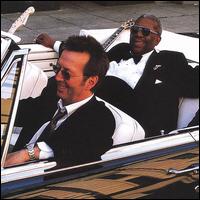
(released by: ERIC CLAPTON & B. B. KING)
Year Of Release: 2000
Record rating = 6
Overall rating = 9
Blues shouldn't be like this, period.
Best song: HOLD ON I'M COMING
Track listing: 1) Riding With The King; 2) Ten Long Years; 3) Key To The Highway; 4) Marry You; 5) Three O'Clock Blues; 6) Help The Poor; 7) I Wanna Be; 8) Worried Life Blues; 9) Days Of Old; 10) When My Heart Beats Like A Hammer; 11) Hold On I'm Coming; 12) Come Rain Or Come Shine.
I'm not gonna pretend to have ever been a big fan of B. B. King - "formal respect" describes these feelings far better than "hot love". (Hey, I do realize that statement looks rather goofy on a page that's mostly pro-Clapton, but then again, I'm the guy who prefers ABBA to Neil Young, too, remember. All good people have long since given up hope for me, and so should you.) Nevertheless, it's hard to imagine a more winning combination than having B. B. King - black blues at its juiciest - and Eric Clapton - white blues at its stunning-est - trade licks off one another and build this collective shrine to the genre. The potential is enormous. And despite Clapton's obvious modesty - posing as a mere chauffeur on that album sleeve, grinning with delight at the perspective of giving a lift to B. B.'s happily relaxing ass in the back seat - that title should really read With The Kings in the plural, meaning it's you the listener who's actually being given a ride in the company of The Supreme Blues Lords. Awesome perspective, isn't it? No can fail.
Well... sure can, actually. The big problem about kings has always been in good kings having bad courtiers - and being too weak-willed and insensitive to conduct a good purge. What if I told you that more or less the same team that was working on the sordid, artificial, completely sterile, electronic monster of Pilgrim now comes back in order to work on Clapton and King's blues album? That the same Simon Climie who mercilessly butchered every shred of a good idea there could be found on that album is now back in the saddle again? You wouldn't believe me, right? Well, yes you'd have to. The trouble with Clapton is that he's either too intelligent to give all that varmint the boot, or too rednecky-stupid to tell varmint from elite. As a Clapton admirer, I'd go for the first; as a strict self-appointed judge, I'd have to choose the second, so let it be both.
Anyway. This isn't really a bad record. It can't be. You'd have to hire a whole pack of Simon Climies and a few cans of Lenny Kravitzes in addition to make a Clapton-B. B. King collaboration into a 'bad' album. (In fact, I'd be interested in hearing this - at least it'd have novelty value. How about a 12" dance remix of 'Pilgrim' with B. B. King on electronically-encoded back vocals and synth loops, for instance?). What this is is simply a very dull record. The worst thing is the production. Where From The Cradle seemed to be breathing with full breast, this one is a clear-cut asthma case if there ever was one. At least Climie lays off the generic hi-tech synth thing, sticking to piano instead - but the piano, too, has this dead-sick tone most of the time that sure makes it impossible to mistake it for a grand piano, you know. The drums, bass, and even guitars are also ever so slightly cleansed up and processed, leaving no space for mistakes, feedback, shirt-buttons clicking against the frets, or, in fact, any other indication of life. The customer has got to be fully satisfied with this perfection!
There's also the track listing. About half of the tunes are old B. B. King standards - that's the best part. The other part, however, is relatively new R'n'B numbers from relatively new R'n'B acts, which do not impress me at all - and often end up annoying me, like the never-ending 'Marry You', which I'll never be able to get out of my head now because of the 'I wanna marry you, isn't that what you want to?' chorus, and if that ain't a personal tragedy, I don't know what is. If these inclusions are there just to show that the old ones are desperately willing to live up to the young 'uns, well, too bad for the old ones. Besides, ever since the Eighties took over, Eric's always been at his worst when doing sex-oriented "steamy" R'n'B numbers - remember 'Forever Man'? No? Good! Something inside me just snaps every time I hear him doing the 'I'll make sure that you get some heat' line in that artificial baritone of his. I am also virulently protesting against the title track - a mid-tempo rocker so lame and inventionless it could easily pass for a recent Bad Company or Foreigner offering.
There's also the main thing - there's just not enough stellar guitarwork on the album! Yeah, I know that's hard to believe, but there's always been two attitudes for Eric - (a) being spurred on by the presence of another virtuoso guitarist, like the Duane Allman presence on Layla and (b) being hindered and derailed by the presence of another virtuoso guitarist, like the Santana presence on 'Why Does Love Got To Be So Sad' on Crossroads 2. With B. B. here, he chooses attitude (b), letting B. B. do all the hard work and sticking to sideman position. That's very nice of you, Eric. Some sucker put in your place would probably never let adoration for one of his teachers stand in the way of egotistic ambitions. The problem is - and I'm sure most B. B. aficionados would back me up here - that the King just isn't at the top of his game on here. It sort of seems that most of the time is being spent in Clapton saying "after you, Mr King" and B. B. saying "no, no, you be my guest, Mr Clapton" and Clapton saying "but I wouldn't dare, Mr King" and B. B. saying "well, neither would I, Mr Clapton".
And this jolly game just keeps going and going until the last few songs on the album. I'd say it's only on 'Days Of Old' that the atmosphere undergoes a slight change, just because of the song's barroom boogie attitude that can't help but require that everybody loose up and lax out a little and start playing like there really ain't a chip that big on their shoulders. Another good moment is the coda to the old Sam & Dave standard 'Hold On I'm Coming', where the two veterans just slip into a good call-and-response groove (how come they never did that earlier?). For those two short minutes, I really do believe that I'm listening to two great masters, rather than two old has-beens. It's not stellar finger-flashing interplay, but it's got spirit, and it's got mutual understanding - the two guitars are really talking to each other rather than just playing whatever they want without paying attention to the surroundings.
Of course, judgement is always extremely subjective when it comes to distinguishing one generic blues performance from another. So I'm not particularly knocking any particular guitar solos (even if I'm honestly rarely wild about them) or any particular vocal deliveries (although I'm somewhat surprised at the amount of grizzly growling Clapton gets on here). Heck, you might find interesting twists and cool subtlety out there - me, I've never pretended that I had the finest blues-attuned ears in the universe or anything like that. But the poor rating doesn't really have much to do with the blues as such - I just happen to be very dissatisfied with the vibe, you know. I also happen to be dissatisfied with it in the general sense of things - up to now, you could always count on Clapton when it came to delivering straightforward blues at least, but this album shows that these days, you already can't. Well, of course these few lame attempts at blueswailing on Pilgrim, like 'Sick And Tired', were an indication, but having a collaboration with B. B. degenerate into total mediocrity? What a bummer.
On the positive side, though, hearing B. B. King playing with Clapton sure beats out seeing the man in Burger King commercials - and is definitely a nicer and more respectable way of making money than the latter. Not that I think he made a whole lot, but then again, Clapton's records get enough publicity these days to guarantee adequate revenue no matter how much artistic value they contain. Wish the same could be said about B. B. King records.
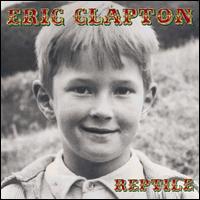
Year Of Release: 2001
Record rating = 6
Overall rating = 9
Summarizing the good and the bad sides of the Nineties.
Best song: TRAVELIN' LIGHT
Track listing: 1) Reptile; 2) Got You On My Mind; 3) Travelin' Light; 4) Believe In Life; 5) Come Back Baby; 6) Broken Down; 7) Find Myself; 8) I Ain't Gonna Stand For It; 9) I Want A Little Girl; 10) Second Nature; 11) Don't Let Me Be Lonely Tonight; 12) Modern Girl; 13) Superman Inside; 14) Son And Sylvia.
Okay, this record is certainly one way to illustrate the good sides of relativity. Had Pilgrim never existed, I'd probably condemn it as total sell-out crap and end up slamming it all over the place. But coming off the heels of Pilgrim, which is among the worst records by an established rock act I've ever heard in my life, Reptile is just plain brilliant. I suppose I should also mention here that a while ago Eric put out this hideous piece of techno trash called 'I Get Lost' that was all over the radio and almost made me throw out the man's entire collection and anathemize his name. Ever heard it? They took a melodyless, primitive acoustic ballad, and turned it into a technofest with Eric singing against an umza-umza beat and adding a totally incompatible acoustic solo in the middle. Yyyyyyyuck.
Anyway, when I first put Reptile on, it was like a revelation and an enormous relief ('the guy finally stays away from drum machines'); second listen brought in a disappointment ('his songwriting is still stuck down the drain'); and the third listen revealed the truth. Reptile is supposed to be some sort of a 'summary' for Clapton, synthesizing all of his Nineties' styles and occupations in one melting pot. There's a lot of acoustic and acoustic-based stuff hearkening back to Unplugged; there's some classic blues motives, hearkening back to From The Cradle; and alas, over everything still rules supreme the demon of Nineties' production values and corporate songwriting/arranging, hearkening back to Pilgrim.
So it is, in fact, not a bad album, and hardly ever as predictable as Pilgrim. The actual production has improved - mainly in the drumming department, as on most of the tracks Eric employs percussionist Paulinho da Costa to actually play something. Not that I'm a big fan: the guy's style is way too 'brush'-reliant, softening the already soft and pretty lifeless tracks to a maddening level, but at least this time you don't get the impression that Clapton has been captured by a robot colony and utterly brainwashed. Much of the rest of the backing band is also carried over from the Pilgrim sessions, mainly Clapton's decade-old guitar-playing partner Andy Fairwether-Low (who's good), and session veteran Billy Preston makes an appearance, livening up the proceedings with excellent keyboard work.
Eric himself... well, I couldn't say he's in top form, but at least I do feel his presence on the album. His singing, in fact, has rarely been better... funny, isn't it, that his voice is by far the only side of his musical personality that got better and better with age and trhe passing of epochs? As for the guitar, well, there's been a lot of accusations at the lack of guitar on this album, but if you ask me, it's pure hogwash. Layla it's not, but there's a strong guitar presence throughout - no crap like 'River Of Tears' where if there was any guitar playing, it was purely prefunctory. There's even a bunch of relatively strong solos to be found throughout, and overall, there's more guitar on this album than there are synthesizers. So there.
Still, there are problems. The biggest problem is that the production still sucks, improved as it is. The entire album sounds as if it's been made on special order from MTV, with everything toned down, glossed out, all sharp edges and angles carefully avoided, a ready product for mass consumption. Take a track like 'Modern Girl', for instance. Could you imagine Eric doing it with the Backstreet Boys singing harmonies? You certainly could. Even when the song essentially is just Eric alone with his acoustic, they still feel a need to add that obligatory adult contemporary synthesizer in the background, because for some reason, it is thought that such a 'brilliant move' will probably make Eric more acceptable for dem kids who love Shania Twain and the Backstreets and you know. And even when Eric 'rips it up' on a pure blues number like 'Got You On My Mind', it's always done in the least offensive manner. I've always taken the accusations of 'white boy playing the blues' with a bit of salt; well, 'Got You On My Mind' is certainly 'white boy playing the blues'. Unfortunately, while that white boy used to play the blues in a distinct and unmatched manner at one time, now he's just similar to millions of white-boy bar-blues bands playing for half a dollar per hour.
The second problem is the songwriting. Simply put, Eric hasn't penned a single memorable song for this album, much like for Pilgrim. It is, in fact, almost of a blessing that about half of the material are covers - when it comes to the originals, the hooks are non-existent. Mostly bland, introspective ballads that, even when taken together, aren't worth a single verse of 'Tears In Heaven' or even 'Old Love'. He does pen one "rocker", 'Superman Inside', but it's a song I could have written in five minutes and less - a primitive, pedestrian piece of modernistic boogie that tries to mask the lack of interesting melody by a booming, 'energetic' delivery but doesn't even have a suitable wild guitar solo to back it up.
Still, out of the fourteen tracks on here, this time around it's at least possible to sort out a moderate bunch of relative highlights. For starters, the two instrumentals that bookmark the album are kinda cute and refreshing; the main melody of the title track, structured as a samba, is funny and charming, and 'Son And Sylvia', while it certainly is elevator music, is at least high-quality elevator music that'll give you some food for thought. The major highlight, for me, at least, is Eric's cover of J. J. Cale's 'Travelin' Light' - he's rarely done wrong with a Cale song before, and he doesn't let the old master now either. It's by far the only "rocking" song on here that has enough sincerity and 'gloomy energy' in it to make it really endearing, and Eric's guitar playing is quite inspired. Even da Costa switches from his mucky brushes on to a normal pair of drumsticks, and the band turns in a performance that buries the rest of the album.
Out of the blues numbers, while I still think that 'Got You On My Mind' is a complete disgrace, 'Come Back Boy' is perhaps the closest to recapturing the firey spirit of From The Cradle, with minor wall-rattling solos and magnificent vocals - obviously, Eric's recent B. B. King collaboration wasn't totally fruitless. 'Broken Down' gets by on the strength of the vocal delivery (gee, I never thought I could be able to say something like that in Eric's case, but times change, don't they?). The cover of Stevie Wonder's 'I Ain't Gonna Stand For It', chosen as the basis for Eric's first video off the album, is good harmless fun; but I certainly have mixed feelings about Eric doing a James Taylor song ('Don't Let Me Be Lonely Tonight') - again, the singing is good, but the song is WAY too MOR-ish and generic for me to be able to praise it.
I can't say that I'm pleased or satisfied with the album. I think I'll put it this way: Reptile was necessary as an at least partial correction of the blunder of Pilgrim, because, let's face it, when one of the best guitar players in the world ends his legacy with such a blatant piece of shit, it's really a hard blow. But if this album is considered to be anything more than an 'error correction', and if Eric thinks of making another album in the same vein, I'd strongly ask him to reconsider, because this is still not the right track. And the first thing to do is to fire the producing guy, Simon Climie. Geez, I thought Tom Dowd was still alive. Why is it that poor Eric becomes a wilful marionette in the hands of all these trendy, MTV-polished guys? First Phil Collins, and now this crook. Boy, can some people be manipulated...
Year Of Release: 1990
An excellent compilation which you should get even if you hate Clapton. Just for the reason it doesn't include any of the fluff found in great numbers on his regular releases. It features some live numbers from his best live album ('Ramblin' On My Mind', 'Further On Up The Road', 'Have You Ever Loved A Woman'), great studio blues ('Cocaine', and yes it has 'Sunshine Of Your Love', too!; 'Steady Rollin' Man' is here as well), his best ballads ('Let It Grow', 'Next Time You See Her'), his best reggae ('I Shot The Sheriff'), plus there's 'Layla' and... well, you'd never guess his was such a patchy career by listening to this album. Indeed, buy it before buying anything else (if it's still in print, of course), and decide for yourself whether you do want anything else.
Indeed, the track listing is very wise, abandoning his worst efforts (There's One In Every Crowd, No Reason To Cry, Backless) and heavily drawing from the best (Ocean Boulevard, EC Was Here, Slowhand). I would love to see 'Presence Of The Lord', too, but I guess we all can have our complaints.
Year Of Release: 1977
A rather nasty video of a local TV performance. Eric is with his American band, looks incredibly bored and resigned, and rumour has it that he was indeed drunk. They perform their regular set of that time, including 'Hello Old Friend', 'Knockin' On Heaven's Door' and, of course, 'I Shot The Sheriff'. Eric's colleague George Terry does a lot of the soloing, especially on the opening songs where Eric plays acoustic, and he's quite good at it. But on the whole I wouldn't recommend this video to anyone in his right mind. I have only watched it once and I'm not going to do it again.
Year Of Release: 1991
Eric's Royal Albert Hall concert session. This video roughly corresponds to the album 24 Nights, with some minor differences (particularly, no 'Badge' or 'Hoodoo Man' here, unfortunately). As I already explained in more detail in the album review, Eric is in top form, although I don't really like his bands (which are many: there's a five piece band, a blues band, a nine piece band, and even a complete orchestra). The highlights here are the Orchestra Nights, with Eric performing 'Bell Bottom Blues', 'Hard Times' and 'Edge Of Darkness'. The video is well done, with huge emphasis on Eric's hands. If you want to see Eric in concert, this is the obvious choice.
Year Of Release: 1992
Get this video only if you want to see Eric's technique on acoustic guitar. It's absolutely unnecessary otherwise, since the track listing is absolutely identic with the CD. A cool Ray Cooper, though.
Year Of Release: 1989?
This video probably went together with the notorious CD compilation of the same name, but it's not identic with the CD. It has some concert footage, mostly live, but some lip-sync, from various periods in Eric's career. Most of the Cream stuff you can find on Cream videos as well, but most of the other stuff is unavailable, including highlights such as: 'Louise', an early blues cover played by The Yardbirds (this is probably the only existent footage of the early Yardbirds with Eric), 'Crossroads' from Cream's farewell concert (which for some strange reason is omitted from the corresponding video), 'Layla' from Live Aid, and a duet with Tina Turner at the Prince's Trust - 'Tearing Us Apart'. The letdowns are other Phil Collins-epoch garbage tracks - 'Forever Man' and especially the horrendous 'Behind The Mask'. Still, the highlights outnumber the letdowns, so get this if you find it.
APPENDIX: REVIEW OF AN ERIC CLAPTON LIVE SHOW IN MOSCOW, APRIL 10TH, 2001
I did give myself a few days to 'cool down' after the show, but even as of now, I'm still totally sure - whatever doubt I could have about Clapton being the best guitar player on Earth before April 10 has totally evaporated.
I'm not even sure if Eric was in top form on that evening or not. However, there's one thing I know: his playing and singing surpassed everything I heard previously since at least Live At The Fillmore. Which makes me wonder - who the hell chooses the selections for his usual live albums, and also, will there be a live album from this tour, and if so, will it match my expectations?
Anyway, here's the lowdown. As we all know, 1998's Pilgrim was Eric's worst album ever, entirely killed off by horrendous production and seemingly uninspired material. 2001's Reptile was a comeback, but only relative - better production, better singing, a bit better guitar playing, but equally lame songwriting. Considering all this, I was certainly anxious about the show - I'd heard many people say that his Pilgrim material sounded better onstage than in the studio, but you can never believe rabid Eric Clapton fans, now can you? Heh heh.
Well, it was pretty much obvious that the show would be wonderful from the very first minutes. No opening act at all (I don't know if it was intended like that or if they bypassed the opening act because we actually had to wait in line to pass the Kremlin metal detectors for about an hour - damn the organizers!); Eric just came out in a simple shirt and jeans and started playing an acoustic 'Key To The Highway'. I had a nice seat in the 17th row, so I was able to see most of what was happening on stage. The setlist was rather standard for the tour - no particular surprises for Moscow. First a pleasant five-song acoustic set, with a major highlight in 'Bell Bottom Blues' and a great version of 'Change The World'. Then Mr Slowhand picks up the electric...
Let me just tell you this: I came to the concert wishing Eric'd play more oldies and less contemporary material. I came out with a steady impression that the Pilgrim set was the best part of the show. Typical example: the best solo Eric played that evening was on 'River Of Tears', a song I could never tolerate on the original album for its lengthiness, monotonousness and uninspiredness. On stage, it was simply rearranged as a slow blues number culminating in a guitar solo that threatened to tear all the listeners out of their seats. The way he alternated speedy, technically perfect notes with lengthy drawled out notes was God-like indeed - what else could I say? Some will say that Eric is way too 'technical' in his approach; some, on the other hand, will say that everybody can have 'emotions', but not everyone can play real fine on a 'human' level. Bullshit. This was the perfect combination of technical proficiency with inhuman inspiration and emotive power I've ever witnessed. Simple as that.
'My Father's Eyes' was fine as well. 'Going Down Slow' gave the band a short chance to jam, showcasing Paulinho da Costa on percussion, and 'She's Gone' had more of those breathtaking solos, well, just like about anything else. Not that the actual songs have turned out to be great - but at least, when stripped of the muffling, poisonous production, they turned out to be songs.
The Reptile part of the set was slightly worse, mainly because the songs weren't the best choices - Eric picked up his acoustic again for 'I Got You On My Mind' (tepid formulaic blues, played well but not any better than in the studio) and 'Don't Let Me Be Lonely Tonight', which he sang beautifully, but heck, it's a James Taylor song, what can I say? 'Travelin' Light' was the best part of that set, but way too short, and then Eric plunged straight into 'Hoochie Coochie Man' and 'Stormy Monday Blues' without a break. The latter, in particular, featured a magnificent, totally ecstatic solo the likes of which I really haven't heard on any of Eric's previous blues recordings, live or studio, whatever. It was the moment when the man was really intent on astounding the audience, and astound the audience he did. That was pure perfection.
The rest was standard - 'Cocaine', 'Wonderful Tonight', 'Layla' (the original electric version - supposedly Eric has gotten sick of the overplayed Unplugged version himself), for the encore we had 'Sunshine Of Your Love'. All of them were done well, but somehow I felt that the real spark of the evening was not in these numbers. Not that they were just played in a perfunctory, obligatory way to please the crowds; they were done fine, but I haven't heard anything exceptional. And 'Layla' seemed a bit drawn out and formulaic for me, too. The show ended with Eric all romantic and nice, introducing the band over a so-so rendition of 'Somewhere Over The Rainbow', a wee bit anticlimactic but hardly offensive.
Particular complaints concern Eric's backups (as usual). Paulinho da Costa did some great percussion work, but the other drummer whose name I don't remember is a real dork. No interesting fills, no minimalism, no technique at all - he just bashed out the rhythm in a clumsy and stupid way, often detracting from the song. The keyboard player was fine, but he kept playing all those synthesized horns that annoyed the hell out of me. And the function of Andy Fairweather-Low is still rather unclear to me after all those years...
On the other hand, the sound was great - sometimes the feedback level was a bit too high, but overall, all the notes came out clear and distinct. The light effects ruled, Eric's voice was amazing, well, you know, nothing to really complain about. I can't say that I was impressed with the show more than with that of the Stones that I saw three years ago, but it was well worth the trouble anyway, and the solos on 'River Of Tears' and 'Stormy Monday' alone were enough to justify the high price of the tickets. So beautiful to see that Eric still hasn't lost it a single bit!